
Indicators of soil health for England
Official statistic in development – indicator under development. The project team would welcome feedback on the novel methods used in the development of these statistics. For example, do they measure something readers feel should be measured, and how well do they represent soil health? Do you find anything confusing? Do you have alternative suggestions for how results could be visualised? As these are indicators under development they have not been assessed.
Last updated: March 2026, with a correction made to the text accompanying Figure 4 in September 2026.
Latest data available: 2023–2024
Type: Modelled impact indicators
Introduction
This Official statistic in development estimates soil health, where soil health is defined as soils’ contribution to the delivery of ecosystem services (ES). It includes interim (year one of five) baseline data for:
- Soils’ influence on reduction of runoff risk for surface water flood prevention.
- Soil carbon, and soils’ influence on long-term carbon storage.
- Soils’ influence on sustainable arable crop provision.
Soils’ impact on ES delivery consists of two aspects:
- How much soils are leading to ES delivery overall (including both the soils’ inherent capabilities and management).
- How well we are managing our soils for ES delivery.
Both of these concepts, and how they relate to each other, are presented in these statistics.
The statistics are designed for use as a high-level, national scale assessment of the overall state of soils in rural England (noting exclusions detailed below). This does not cover all user needs, and so will be complementary to indicators under development in other projects that focus on site-based (e.g. assessments for farmers to undertake themselves) or policy-specific (e.g. measuring the effectiveness of agri-environment schemes) indicators.
Key results
The interim results presented here are based on data from several sources, including the Natural Capital and Ecosystem Assessment (NCEA) programme’s England Ecosystem Survey (EES). EES is designed to produce a five-year baseline (i.e. five years = one data point) that is representative across English ecosystems and habitats, excluding freshwater, marine, woodlands and urban areas. However, only the first year of data from the EES are currently available. The results should therefore be treated as demonstrative rather than representative at this stage. Confidence in the results will improve as additional field data are incorporated in future and additional analyses on their representativeness are undertaken.
Summary table
Table 1: A summary of headline results for: (a) Ecosystem Service (ES) delivery through soils; and (b) optimisation of soil management
|
Ecosystem service |
How well rural English soils are leading to ES delivery overall (including inherency and management) |
How well rural English soils are being optimised for ES delivery through management |
|
Mitigation of surface water flood risk (modelled) |
63.5% |
64.0% |
|
Current carbon storage (measured) |
71 t C ha-1 |
N/a |
|
Long-term carbon storage (modelled) |
59.6% |
35.3% |
|
Sustainable arable crop provision (modelled) |
61.9% |
55.9% |
Please refer to the main results below for visualisations, interpretation notes, caveats/limitations, and sources.
Guide to interpreting the visualisations
The models that underly the results include both ‘inherent variables’ (such as soil texture and climatic variables), which are difficult to influence with management, and variables that are possible to influence with management (such as earthworm counts and soil organic matter). The gauge visualisations (Figures 1, 3 and 4) represent the full range of possible results (0–100%; black text) from worst to best possible conditions for ecosystem service delivery, including for inherent variables (e.g. for the water model, a score of 100% could only be achieved if soil texture and climate are also optimised to mitigate surface water flood risk). Within the gauge, results are provided about two different pieces of information:
- The shaded part of the gauge (0–100%, blue text) represents the range of possible scores, as constrained by inherent properties of the soils in rural England (i.e. the soils’ capability, averaged across sampled sites). The position of the ‘pointer’ within this inner range therefore shows how well soils are contributing to ecosystem service delivery compared to what is possible based on optimum management. This allows for an understanding of how well England is doing at protecting ES delivery, as far as is in our reasonable control. Whether something was within our ‘reasonable control’ was assessed by soil science experts.
- The position of the ‘pointer’ within the full range of the gauge (0–100%, black text) shows how well soils are contributing to ecosystem service delivery compared to a theoretical optimum (100%). This allows for assessment of how great a contribution soils are making to ES delivery overall, presented on a comparable and consistent scale that can be used across contexts (e.g. if comparing the England value to a regional subset, to a subset of the data consisting of only a particular land use type, or to application of the same method in another UK country).
The shaded part of the gauge is nested within the full range of the gauge to estimate how much of the variation within the overall results is possible to control with management, versus what is outside the capability of rural English soils to deliver because of inherent constraints such as soil texture. Each ES is affected by different variables in different ways, meaning that the shaded range and capability vary in each gauge presented.
Water: soils’ contribution to runoff reduction
Based on the sites sampled, soils in rural England in 2023-24 score 63.5% in terms of how well they mitigate surface water flood risk through changes in runoff overall, based on inherency and management, excluding sealed surfaces (Figure 1, n = 600). They score 64.0% when considering only how well we are optimising soils for mitigation of surface water flood risk, through management (i.e. this is the percentage of the way through the shaded part of the gauge that the pointer is, in Figure 1). In technical terms, each score represents the likelihood of ES delivery across rural England, as they are based on probabilistic modelling. In simple terms, a higher score can be considered better soil health in the context of surface water flood prevention.
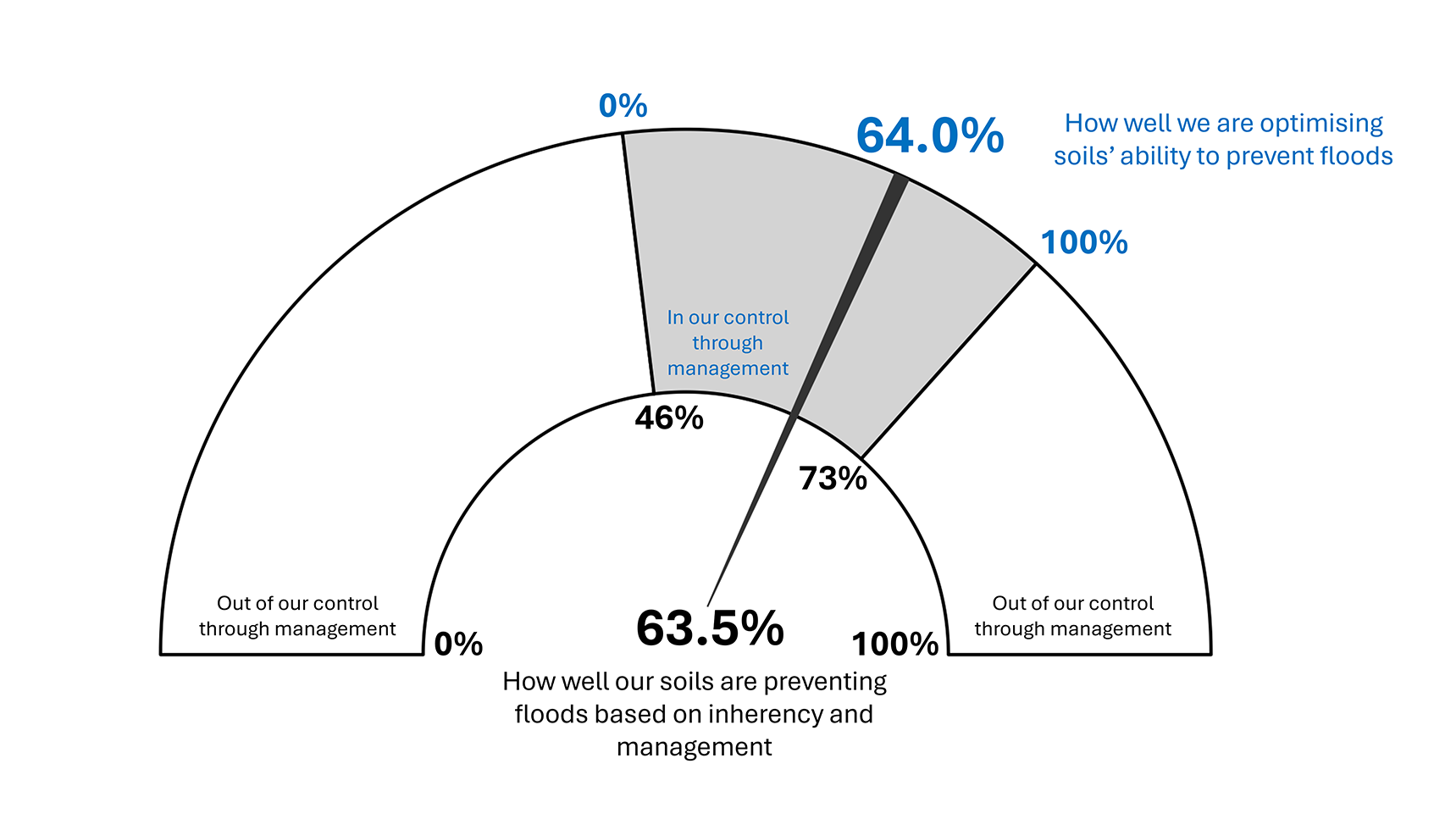
Figure 1. Lower gauge/black result: how well rural English soils are preventing surface water floods based on inherency and management. Upper gauge/blue result: how well we are optimising soils’ ability to prevent surface water floods through management. (2023-24; n = 600)
Lower gauge/black result:
- This represents the likelihood that current soil conditions in rural England (excluding sealed surfaces) are reducing runoff, leading to mitigated surface water flood risk, based on the sites sampled.
- A result of 100% would indicate soils with both optimal natural ability to mitigate flood risk, and optimal condition due to management that is well-suited to mitigate flood risk (e.g. a highly absorbent soil texture and low compaction, which support infiltration).
- A result of 0% would indicate both a poor natural ability to mitigate flood risk, and poor condition caused by management that is ineffective to mitigate flood risk (e.g. poorly absorbent soil texture and highly compacted soils, meaning low infiltration rates).
- The calculations behind this part of the graph take into account both inherent factors (e.g. soil texture) and factors that can be reasonably controlled through management (e.g. compaction). It aggregates data from a sample of sites across the country that vary in soil and land use type; breakdowns for these types can be found in the ‘Additional data’ section.
Upper gauge/blue result:
- This quantifies how well our care and management of soils is reducing and mitigating surface water flood risk (based on the sites sampled), compared to what would be possible under optimum management.
- A result of 100% would indicate that all variables that can be reasonably influenced by management, are in their best possible condition (e.g. low compaction, high soil organic matter).
- A result of 0% would indicate that all variables that can be reasonably influenced by management are in their worst possible condition (e.g. high compaction, low soil organic matter for soil type).
- This part of the graph illustrates how well England is doing at protecting and optimising ecosystem service delivery through rural soil management.
Notes for Figure 1:
- The scope of this model is rural landscapes; therefore cases where precipitation cannot reach the soil (e.g. concrete sealing) are excluded from consideration. Whilst some sealing will take place in rural environments, it is not mapped to a sufficient degree to allow for inclusion.
- Results do not provide information on the extent or magnitude of potential flooding, nor predict when or where flooding might take place; they provide information on the likelihood that soils will contribute to mitigating surface water flood risk given their current condition. It aims to communicate soils’ contributions to mitigating this risk at a high-level across the country; it does not target monitoring to identify problem hotspots.
- The scope of this model is soils’ contribution to mitigated surface water flood risk through changes in runoff. Other types of flood risk, e.g. storm surges or fluvial flooding, are not considered within scope.
- Some runoff is natural. The theoretical maximum (100%) is therefore not a state of no runoff (or of no flooding), but rather of mitigating surface water flood risk as far as is possible.
- EES is designed to produce a five-year baseline (i.e. five years = one data point) that is representative (for land use types within scope) and able to detect statistically significant change in further data cycles. However, only the first year of data from the EES is currently available.
- As a baseline statistic, data are currently only available for one timepoint. Ultimately, when more timepoints are available, it will be able to show relative change through time (is soil health in the context of flood mitigation improving or deteriorating?).
- Breakdowns of results by soil and land use type are presented in the ‘Additional data and results’ section, below.
Source: JNCC soil health models, using data from the NCEA England Ecosystem Survey, Copernicus, Alert, UKCEH Land Cover Map. Contains England Ecosystem Survey data, a Natural England project within Defra's NCEA Programme, licensed under the Open Government Licence v3. Contains UKCEH data © Copyright UKCEH [2023] and modified Copernicus Service information [2024]. See technical documentation for full details.
Carbon: current soil carbon, and soils’ contribution to long-term carbon storage
Based on the sites sampled, soils in rural England contain an overall median average of 71 t C ha-1 (n = 509), with mineral soils containing a median average of 68 t C ha-1 (n = 480) and peat soils containing a median of 135 t C ha-1 (n = 29, Figure 2).
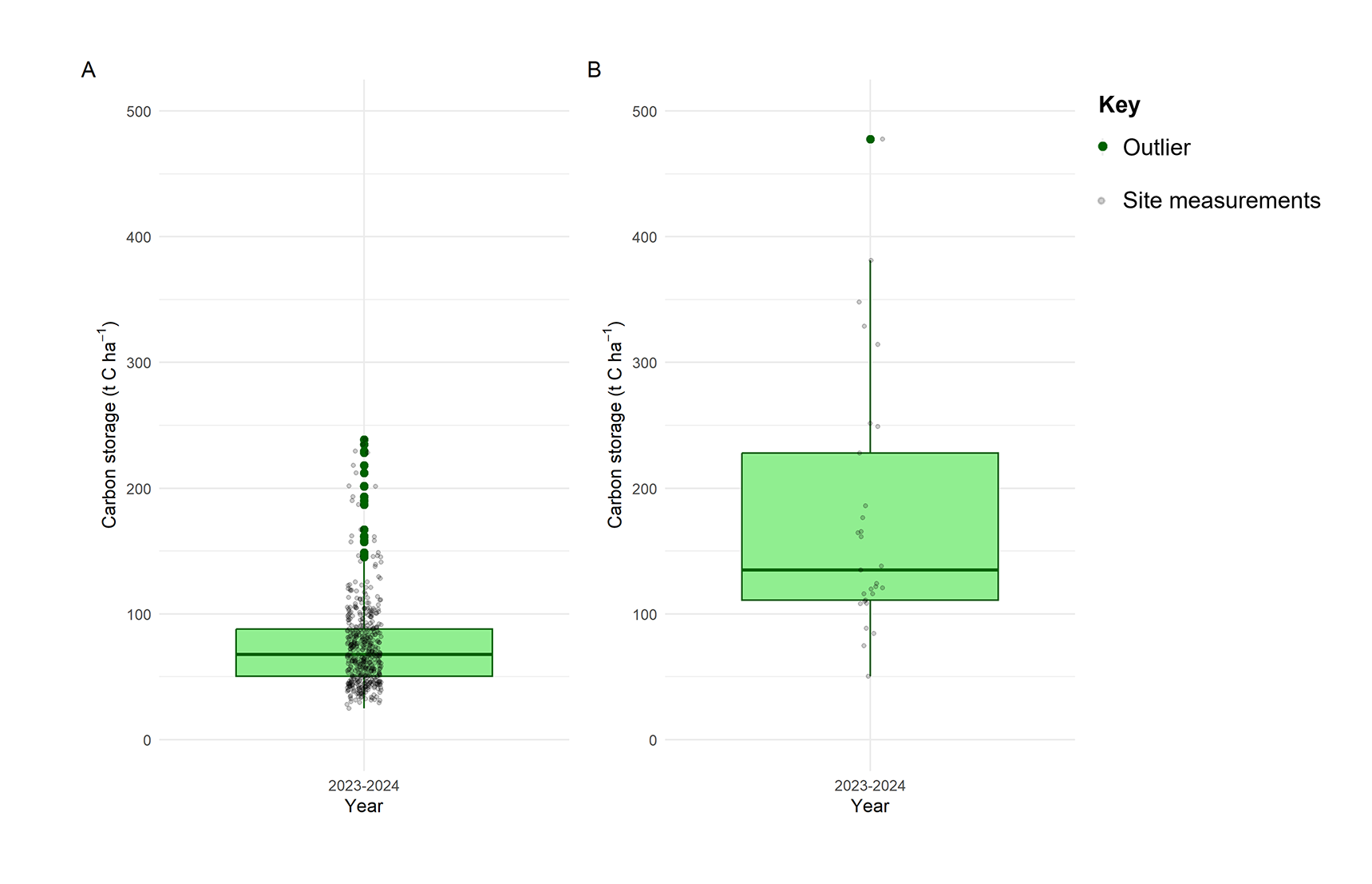
Figure 2. Median carbon storage (t C ha-1) in 2023-24, based on the sites sampled in: (A) English mineral soils (n = 480); and; (B) English peaty soils (n = 29). Boxplots show medians and interquartile ranges, with outliers highlighted as green points; the distribution of site measurements are shown as semi‑transparent scatter points.
Notes for Figure 2:
- This figure reports on measured data about absolute carbon volumes being stored in soil. It should be interpreted in combination with Figure 3, which shows how stable this carbon is estimated to be into the future if current conditions continue (i.e. high carbon stocks are good; but they also present a risk of higher carbon release if conditions are poor).
- Data for this graph currently include samples from both mineral and peaty soils.
- As a baseline statistic, data are currently only available for one timepoint. Ultimately, when more timepoints are available, it will be able to show relative change through time (is soil health in the context of carbon storage improving or deteriorating?).
- EES is designed to produce a five-year baseline (i.e. five years = one data point) that is representative for land use types within scope. However, only the first year of data from the EES are currently available.
Source: NCEA England Ecosystem Survey. Contains England Ecosystem Survey data, a Natural England project within Defra's NCEA Programme, licensed under the Open Government Licence v3. See technical documentation for full details.
Based on the sites sampled, soil conditions in rural England in 2023-24 score 59.6% in terms of how well they support long-term carbon storage, through changes in both carbon entering and leaving the soil system (inputs and turnover) overall, based on inherency and management (Figure 3, n = 563). This is currently based on data from mineral soils only (although development work aims to add data from peat soils in the future). They score 35.3% when considering only how well we are optimising soils for long term carbon storage through management (i.e. this is the percentage of the way through the shaded part of the gauge that the pointer is). Long term carbon storage can be considered an indicator of the stability of the carbon that is present in the soil. In technical terms, each score represents the likelihood of ES delivery across rural England, as they are based on probabilistic modelling. In simple terms, a higher score can be considered better soil health in the context of surface water flood prevention.
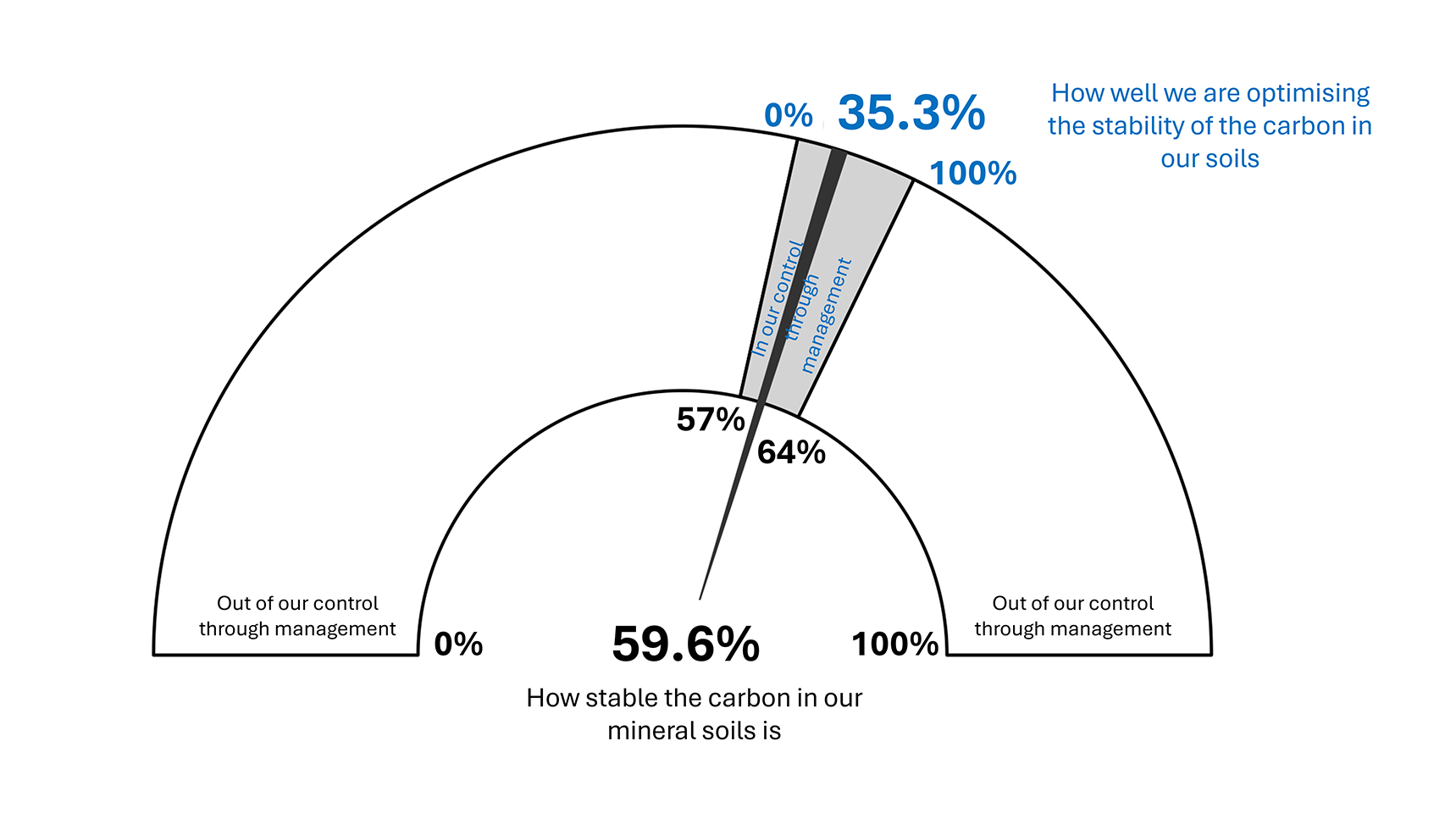
Figure 3. Lower gauge/black result: how stable the carbon in rural English mineral soils is, based on models. Upper gauge/blue result: how well we are optimising the stability of the carbon in our soils through management. (2023-24, n = 563)
Lower gauge/black result:
- This represents the likelihood that current soil conditions in rural England will lead to long-term carbon storage through changes in carbon entering and leaving the soil system (inputs and turnover). Results can be considered an indicator of the stability of the carbon that is present in the soil.
- A result of 100% would indicate soils with both an optimal natural ability to store carbon long-term, and optimal condition due to management that is well-suited to store carbon long-term (e.g. a heavy soil texture and use of crop rotation).
- A result of 0% would indicate both a poor natural ability to store carbon long term, and poor condition caused by management that is ineffective to store carbon long term (e.g. light/sandy soil texture and lack of crop rotation).
- The calculations behind this part of the graph take into account both inherent factors (e.g. soil texture) and factors that can be reasonably controlled through management (e.g. tillage practices). It aggregates data from a sample of sites across the country that vary in soil and land use type; breakdowns for these types can be found in the ‘Additional data’ section.
Upper gauge/blue result:
- This quantifies how well our care and management of soils is leading to long-term carbon storage, compared to what would be possible under optimum management.
- A result of 100% would indicate that all variables that can be reasonably influenced by management, are in their best possible condition (e.g. low erosion, presence of cover crops).
- A result of 0% would indicate that all variables that can be reasonably influenced by management are in their worst possible condition (e.g. high erosion, absence of cover crops).
- This part of the graph illustrates how well England is doing at protecting and optimising ecosystem service delivery through rural soil management.
Notes for Figure 3:
- “Long-term” in this context is considered to be on a timescale of > 20 years.
- Results do not provide information on the extent or magnitude of carbon stored or released; they only provide information on the likelihood that soils will contribute to long-term storage given their current condition.
- Variables that are likely to have a short-term impact on carbon stock before reaching a new equilibrium (e.g. crop rotation, cover crops, reduced tillage) are considered within scope, but the assumption behind this is that any current activity would continue into the long term (i.e. a system regularly undertaking these activities would have higher long-term carbon storage than a system not undertaking them).
- This model currently excludes data from samples of peaty soils, as the mechanisms behind carbon storage in peat are different to those in mineral soils. Future development work will aim to add this. In general, peaty soils store more carbon than mineral soils but are more susceptible to carbon loss through degradation.
- As a baseline statistic, data are currently only available for one timepoint. Ultimately, when more timepoints are available, it will be able to show relative change through time (is soil health in the context of carbon stability improving or deteriorating?).
- EES is designed to produce a five-year baseline (i.e. five years = one data point) that is representative for land use types within scope. However, only the first year of data from the EES are currently available.
- Breakdowns of results by soil and land use type are presented in the ‘Additional data and results’ section, below.
Source: JNCC soil health models, using data from the NCEA England Ecosystem Survey, Copernicus, Upcott 2023, British Survey of Fertiliser Practice 2024, Kirkby et al. 2008, 2004, UKCEH Land Cover Map, Farm Practices Survey 2010, OS Terrain 50. Contains England Ecosystem Survey data, a Natural England project within Defra's NCEA Programme, licensed under the Open Government Licence v3. Contains UKCEH data © Copyright UKCEH [2023], OS data © Crown copyright [2024], and modified Copernicus Service information [2024]. See technical documentation for full details.
Food/fibre: soils’ potential contribution to sustainable arable crop provision
Based on the sites sampled, soil conditions in England’s arable soils in 2023-24 score 61.9% in terms of how well they support sustainable arable crop provision through estimated changes in long-term yields overall, based on inherency and management (Figure 4, n = 218). They score 55.9% when considering only how well we are optimising soils for sustainable arable crop provision through management (i.e. this is the percentage of the way through the shaded part of the gauge that the pointer is). In technical terms, each score represents the likelihood of ES delivery across rural England, as they are based on probabilistic modelling. In simple terms, a higher score can be considered better soil health in the context of surface water flood prevention.
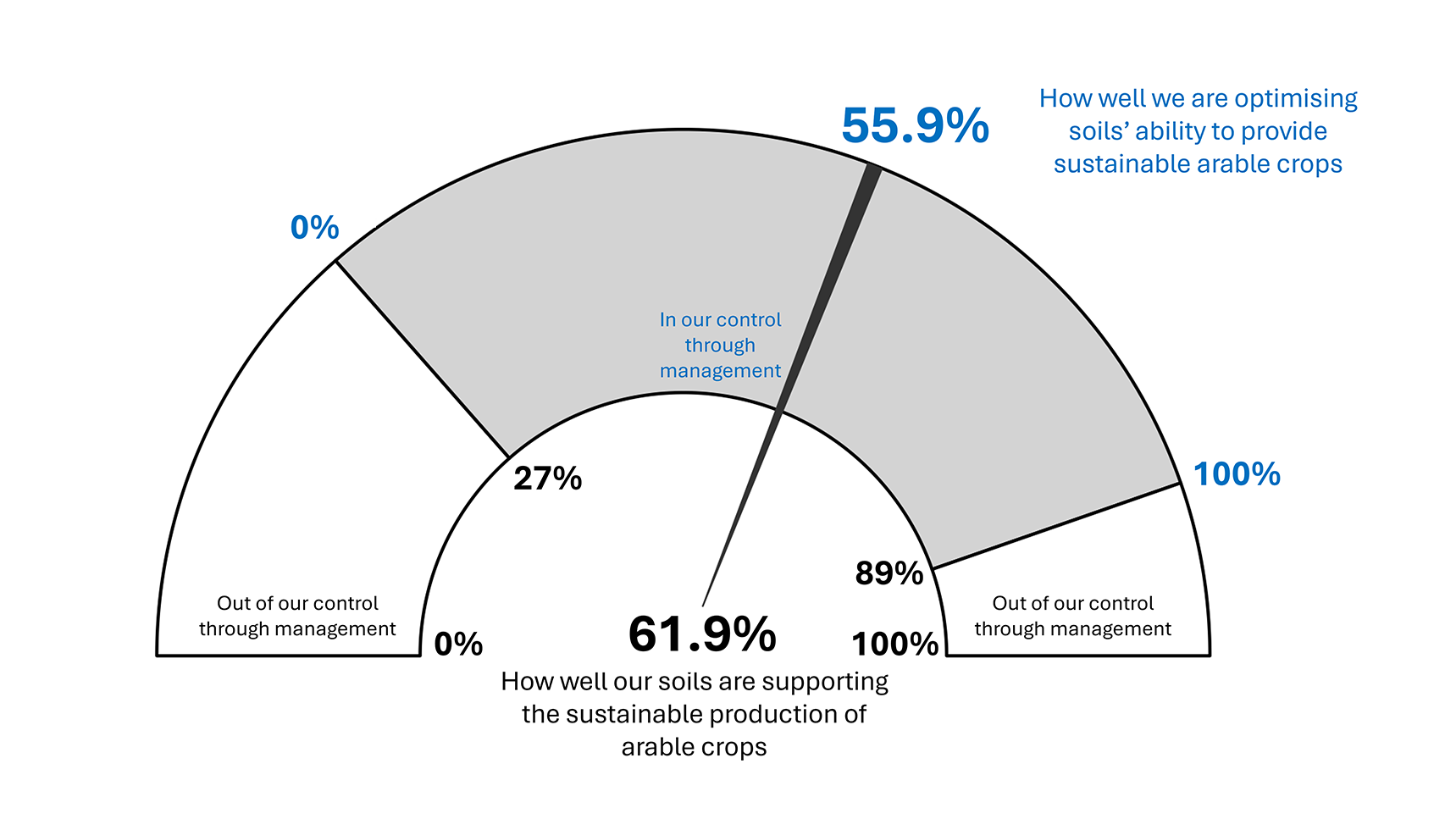
Figure 4. Lower gauge/black result: how well rural English cropland soils are supporting the sustainable production of arable crops. Upper gauge/blue result: how well we are optimising the ability of our soils to provide sustainable arable crops through management. (2023-24; n = 218)
Lower gauge/black result:
- This represents the likelihood that current condition of England’s arable soils will lead to sustainable arable crop provision. In this context, ‘sustainable’ demonstrates that the focus is on sustaining long-term arable crop provision into the future (a balance between yields and ability to sustain those yields), rather than maximising short-term yields (in the current or next few years) at the expense of future harvests.
- A result of 100% would indicate that these soils have both an optimal natural ability to provide crops sustainably, and optimal condition due to management that is well-suited to provide crops sustainably (e.g. high earthworm counts and optimum pH).
- A result of 0% would indicate both a poor natural ability to provide crops sustainably, and poor condition caused by management that is ineffective to provide crops sustainably (e.g. low earthworm counts and a sub-optimal pH).
- The calculations behind this part of the graph take into account both inherent factors (e.g. soil moisture) and factors that can be reasonably controlled through management (e.g. compaction). It aggregates data from a sample of sites across the country that vary in soil and land use type.
Upper gauge/blue result:
- This quantifies how well our care and management of soils is leading to sustainable crop provision, compared to what would be possible under optimum management.
- A result of 100% would indicate that all variables that can be reasonably influenced by management, are in their best possible condition (e.g. low compaction, optimum nutrient presence).
- A result of 0% would indicate that all variables that can be reasonably influenced by management are in their worst possible condition (e.g. high compaction, nutrient presence that is either too high to be sustainable or too low for good yields).
- This part of the graph illustrates how well England is doing at protecting and optimising ecosystem service delivery through rural soil management.
Notes for Figure 4:
- In this context, ‘sustainable’ demonstrates that the focus is on sustaining long-term arable crop provision into the future (a balance between yields and ability to sustain those yields), rather than maximising short-term yields (in the current or next few years) in cases where this is at the expense of future harvests. It encompasses both the environmental (e.g. pollution caused by application of too much fertiliser) and economic (e.g. yields and therefore profits are supported in the long term) pillars of the 3-pillared sustainability model (social, economic, environmental).
- Variables that are likely to have a short-term impact on yields (e.g. crop rotation, available phosphorous) are considered within scope, but the assumption behind this is that the state of these variables would continue into the long term.
- The current scope of the model is restricted to arable crops. However, development work in future years will aim to expand this to describe all food/fibre provision, including integrating data and variables of relevance to timber from forestry and meat from grazing.
- Results do not provide information on yields directly; they provide information on the likelihood that soils could contribute to sustainable arable crop provision given their current condition.
- Areas not currently used as arable cropland are excluded from scope; e.g. the potential of current grassland to provide crops if land were used for this purpose is not considered.
- As a baseline statistic, data are currently only available for one timepoint. Ultimately, when more timepoints are available, it will be able to show relative change through time (is soil health in the context of sustainable crop provision improving or deteriorating?).
- EES is designed to produce a five-year baseline (i.e. five years = one data point) that is representative for land use types within scope. However, only the first year of data from the EES are currently available.
Source: JNCC soil health models, using data from the NCEA England Ecosystem Survey, Upcott 2023, Kirkby et al. 2008, 2004, and Natural England 2017. Contains England Ecosystem Survey data, a Natural England project within Defra's NCEA Programme, licensed under the Open Government Licence v3. Contains modified Copernicus Service information [2024]. See technical documentation for full details.
Indicator description
The full methods for this indicator can be found in the technical documentation. This indicator is being published as an official statistic in development to facilitate user involvement in its development – information on how the underlying data have been obtained and how the indicator has been prepared is available in the technical documentation. We would welcome any feedback, particularly on the usefulness and value of these statistics.
In brief, the three modelled results presented are based on Bayesian Belief Network models developed by JNCC, based on literature review and expert elicitation. The key variables affecting each ecosystem service, and their relative weightings and relationships, were identified through a literature review and expert panel elicitation process. From this, conceptual ecological models (illustrated in the methods document) and conditional probability tables (which describe the weightings of and relationships between each variable) were developed. Data (from the sources listed under each figure above) were input into these models to produce the results presented here.
The additional carbon result presented on median carbon storage (t C ha-1) is calculated from the absolute values of soil organic carbon (SOC) and fine bulk density (BD) for the top 30 cm of soil depth, following IPCC guidelines for calculating carbon stock change (IPCC, 2003), using measurements which were collected by the England Ecosystem Survey. Results are presented as the median average carbon stock across different land use types.
Relevance
Healthy soils are critical for the delivery of ecosystem services such as food production, water regulation, biodiversity support, and carbon storage. Maintaining soil health is crucial for soils to be resilient to climate change impacts, including increased flooding and drought. The Environmental Improvement Plan acknowledges this significance by including ‘soil health’ as one of 66 indicators of environmental change in the Environmental Indicator Framework. These indicators will help to show how the environment is changing over time and support the assessment of policies and other interventions.
The Environment Agency's State of the Environment Report (2019) indicates that soil health in England faces several pressures such as compaction, erosion, and agricultural intensification. Improving soil health offers a multitude of benefits, including increased agricultural yields, reduced flooding risks, and improved air quality.
Effective soil management requires the ability to measure and track changes in its health over time. However, assessing soil health presents a significant challenge due to its complex nature, encompassing physical, chemical, and biological properties. England’s soils also boast a diverse range of soil types, climates, and land uses.
This standardised national soil health indicator was therefore developed to enable several benefits:
- Comprehensive Monitoring: Track changes in soil health over time at a national scale;
- Effective Communication: Clearly communicate soil health status to policymakers and the public;
- Objective Measurement: Provide a consistent and unbiased measure for comparison across different land uses (e.g. see additional data section) and regions (which may be possible to analyse in future);
- Informed Land Management: The model networks behind the indicator could help to guide practices that promote soil health and overall sustainability (the impacts of such practices have been researched to inform indicator development);
- Streamlined Data Collection: Improve consistency of monitoring programmes.
Background
The official statistic in development was developed building on a proof-of-concept project undertaken by JNCC and Cranfield University under contract to Defra in 2021-22 (Harris et al., 2023). Whilst this initial proof-of-concept study focused on local scale assessments with landowner input, work by JNCC in 2023-24 focused on scaling this to give results at a national level. Alongside this, literature reviews were undertaken, and an expert panel was convened, to validate and improve on the models proposed in the proof-of-concept. Further work in 2024-26 developed the models and ran field data through them to produce the interim results presented here. It is planned that work will continue to further refine the models and to add the data collected in the rest of the 5-year EES collection cycle to produce a final baseline statistic by 2030. Beyond this, further data collection will contribute to the next point in the time series.
Additional data and results
In addition to the headline metrics presented in the key results section, breakdowns of results by soil (heavy, medium, light, peaty) and land type (cropland, shrub/grassland, tree cover, bog) were calculated (Figures 5 to 17). In cases where there are currently fewer than 30 data points for a combination of soil and land type (e.g. all soil types in tree covered areas), a results breakdown has not yet been produced, but will follow in subsequent publications once enough data have been collected (for clarity, these datapoints were included in the aggregated totals presented as headline results above). Additionally, breakdowns are not currently presented for the crop provision results, as arable cropland is the only land use type within scope at this stage. Note that for the water model, the breakdown by soil refers to the light/medium/heavy/peaty classification as used in the shallow (0–30 cm) branch of the model (see the methods document for further detail).
Please refer to the main results for notes on interpretation.
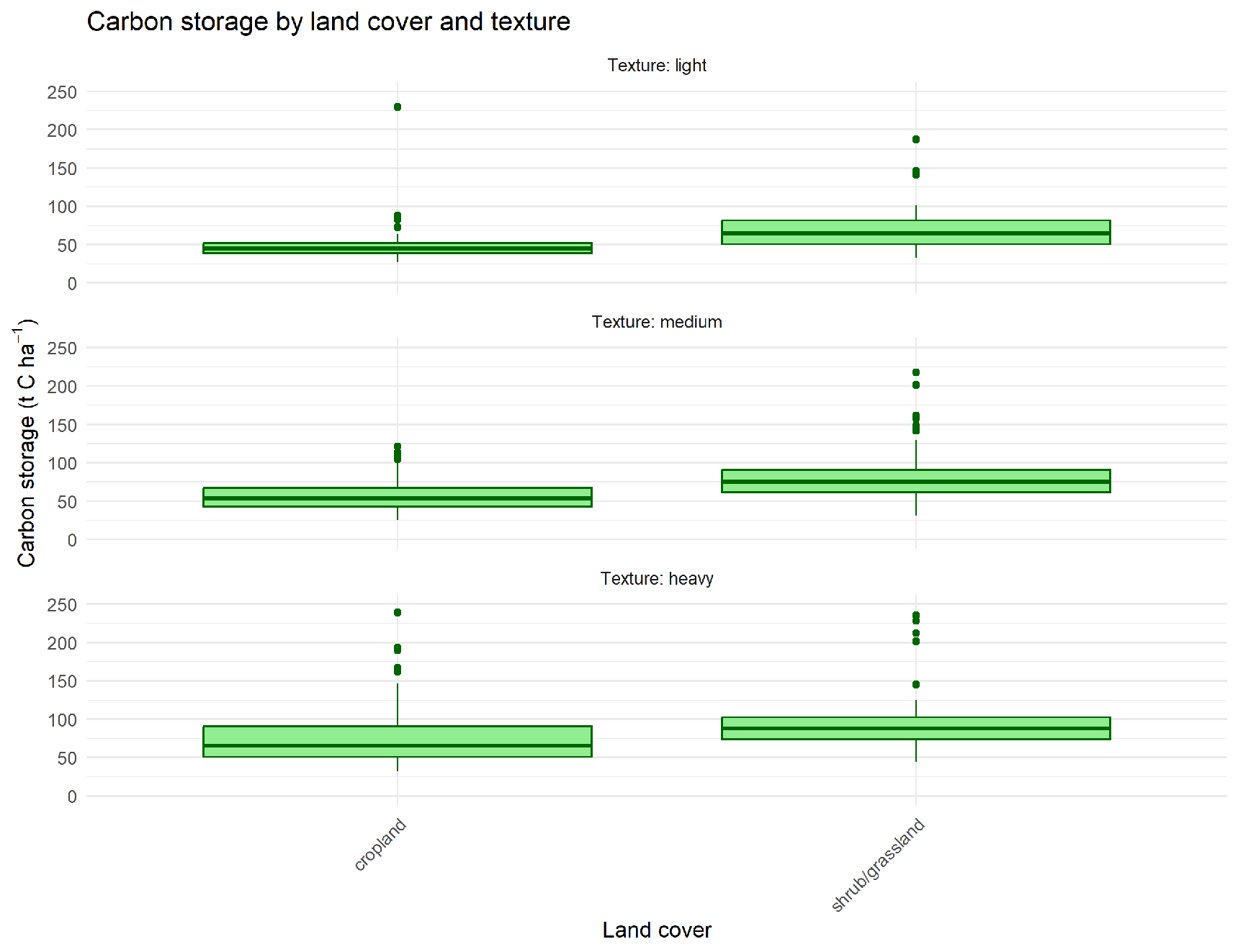
Figure 5. Breakdown of median carbon storage (t C ha-1) in 2023-24, by land cover and soil texture, based on the sites sampled. Boxplots show medians and interquartile ranges, with outliers highlighted as circles. Note that breakdowns for any soil/land combinations involving tree cover, bog, or peaty soils are not shown as the sample size was below 30 (although these data points are included in the aggregated main result reported in Figure 2).
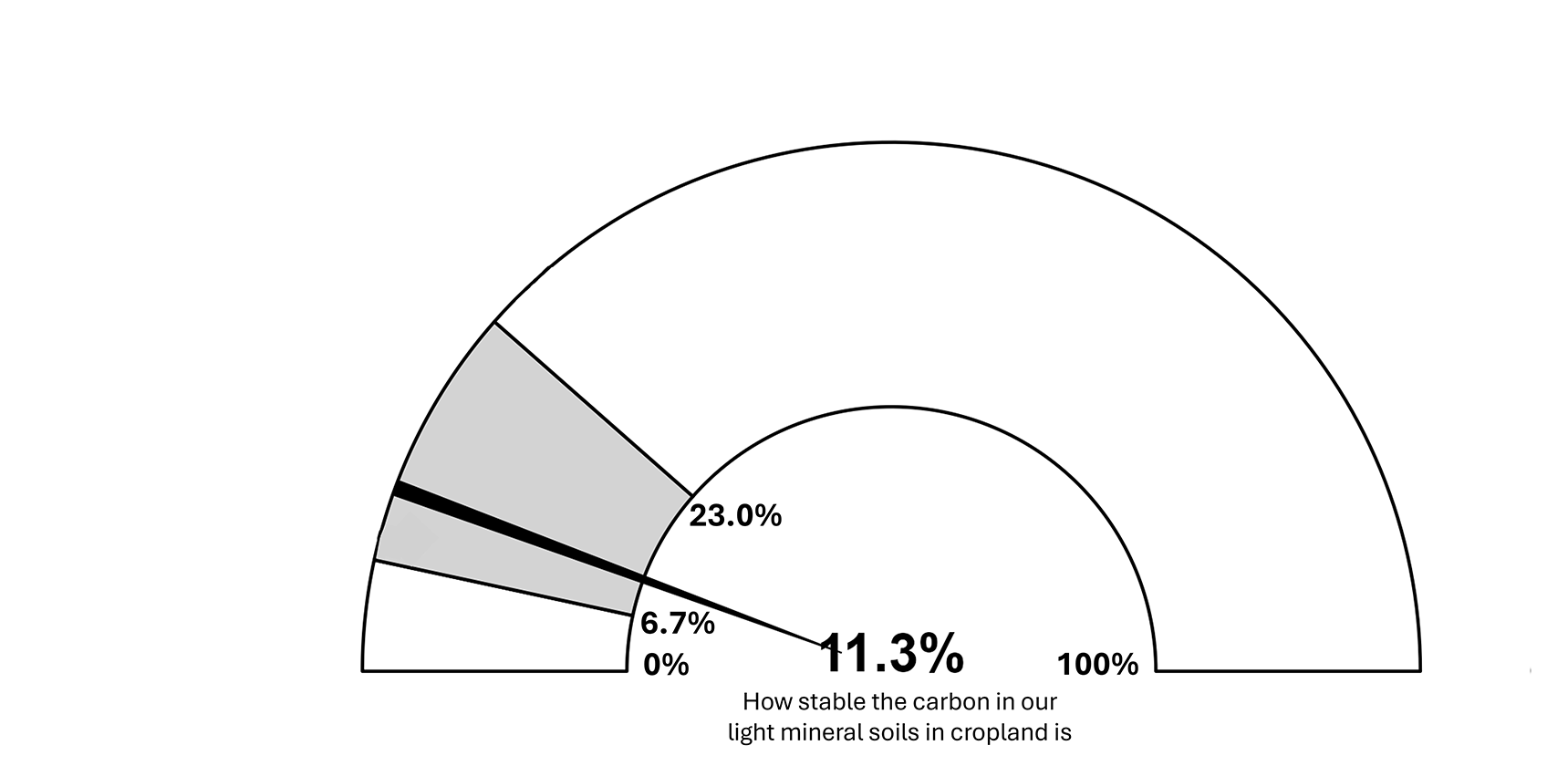
Figure 6. Modelled carbon stability results for light mineral soils in cropland (n = 73). An optimisation result is not provided as the current management data sources do not vary per soil type.
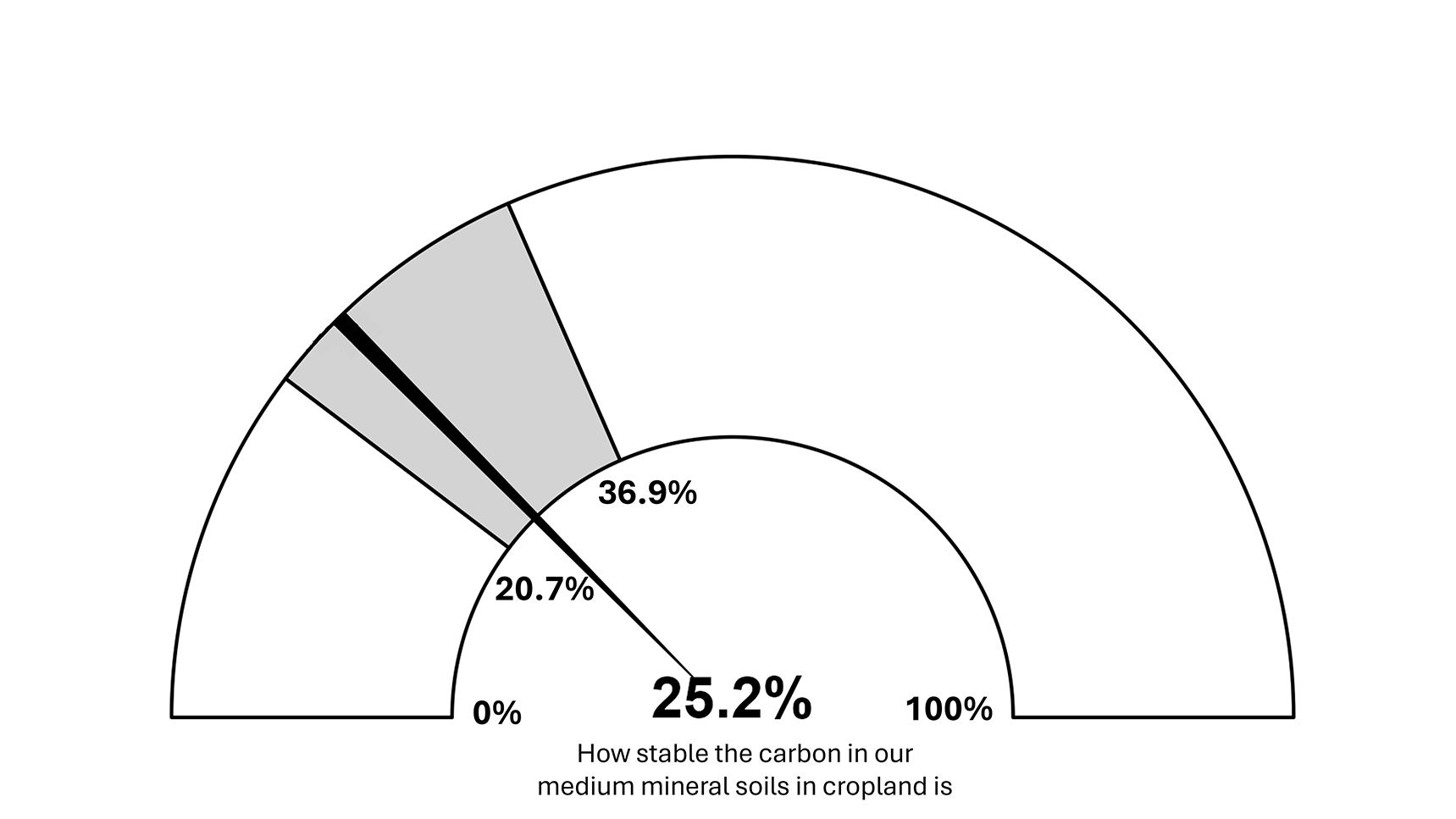
Figure 7. Modelled carbon stability results for medium mineral soils in cropland (n = 80). An optimisation result is not provided as the current management data sources do not vary per soil type.
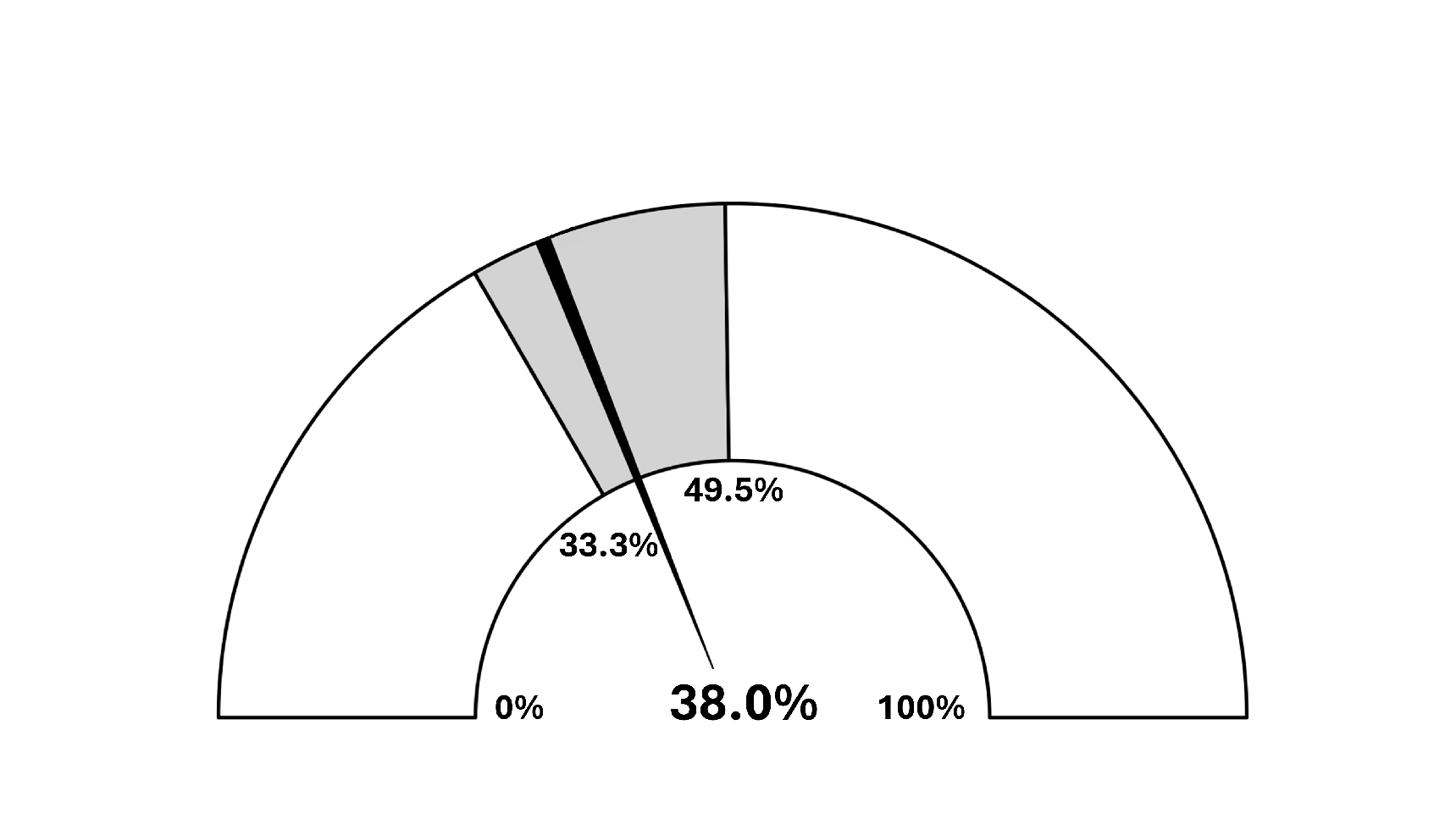
Figure 8. Modelled carbon stability results for heavy mineral soils in cropland (n = 68). An optimisation result is not provided as the current management data sources do not vary per soil type.
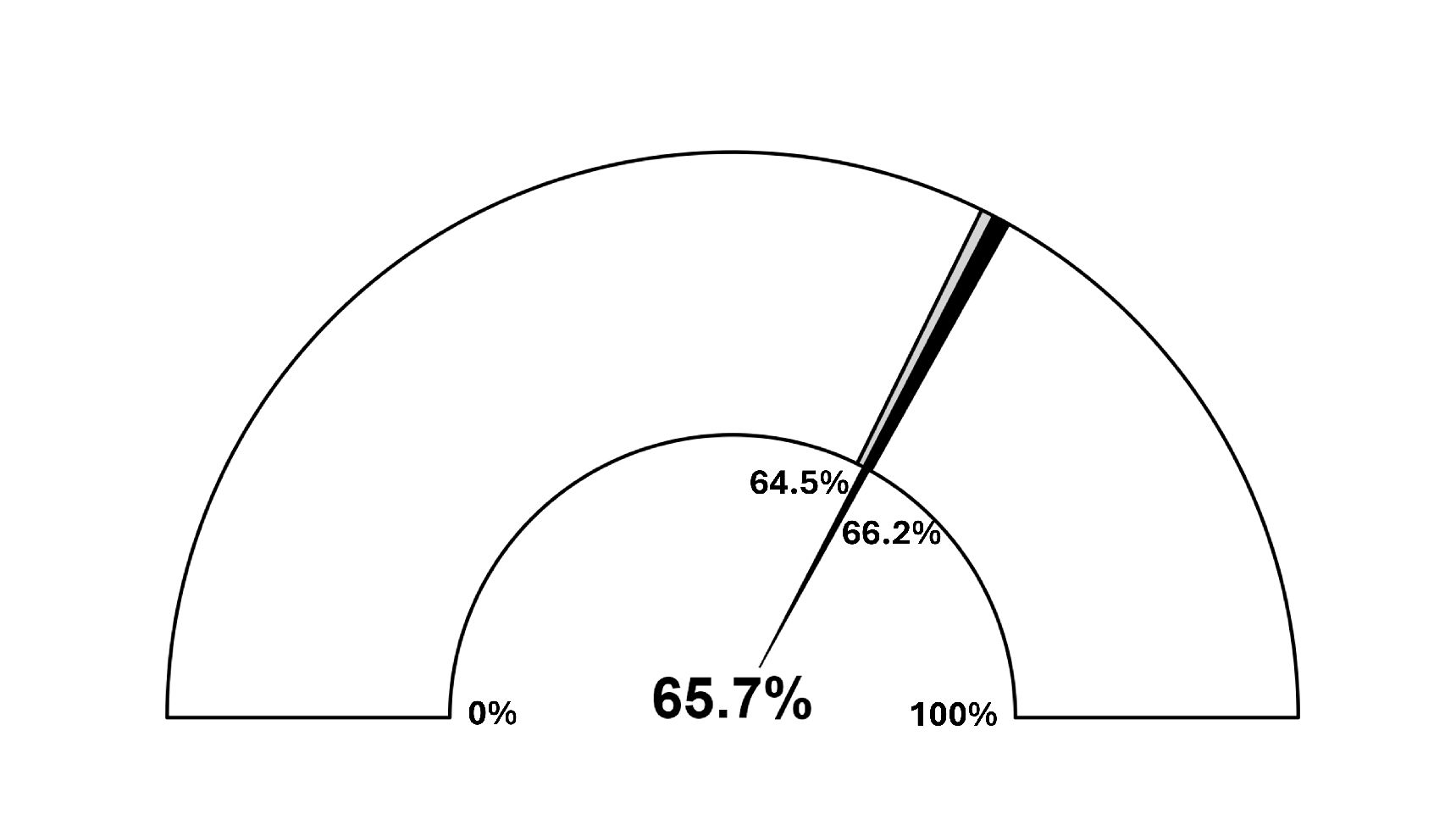
Figure 9. Modelled carbon stability results for light mineral soils in shrub/grassland (n = 70). Note that future development work is planned to scope the incorporation of more management actions of relevance to non-cropland land use types, which may widen the grey range in future. An optimisation result is not provided as the current management data sources do not vary per soil type.
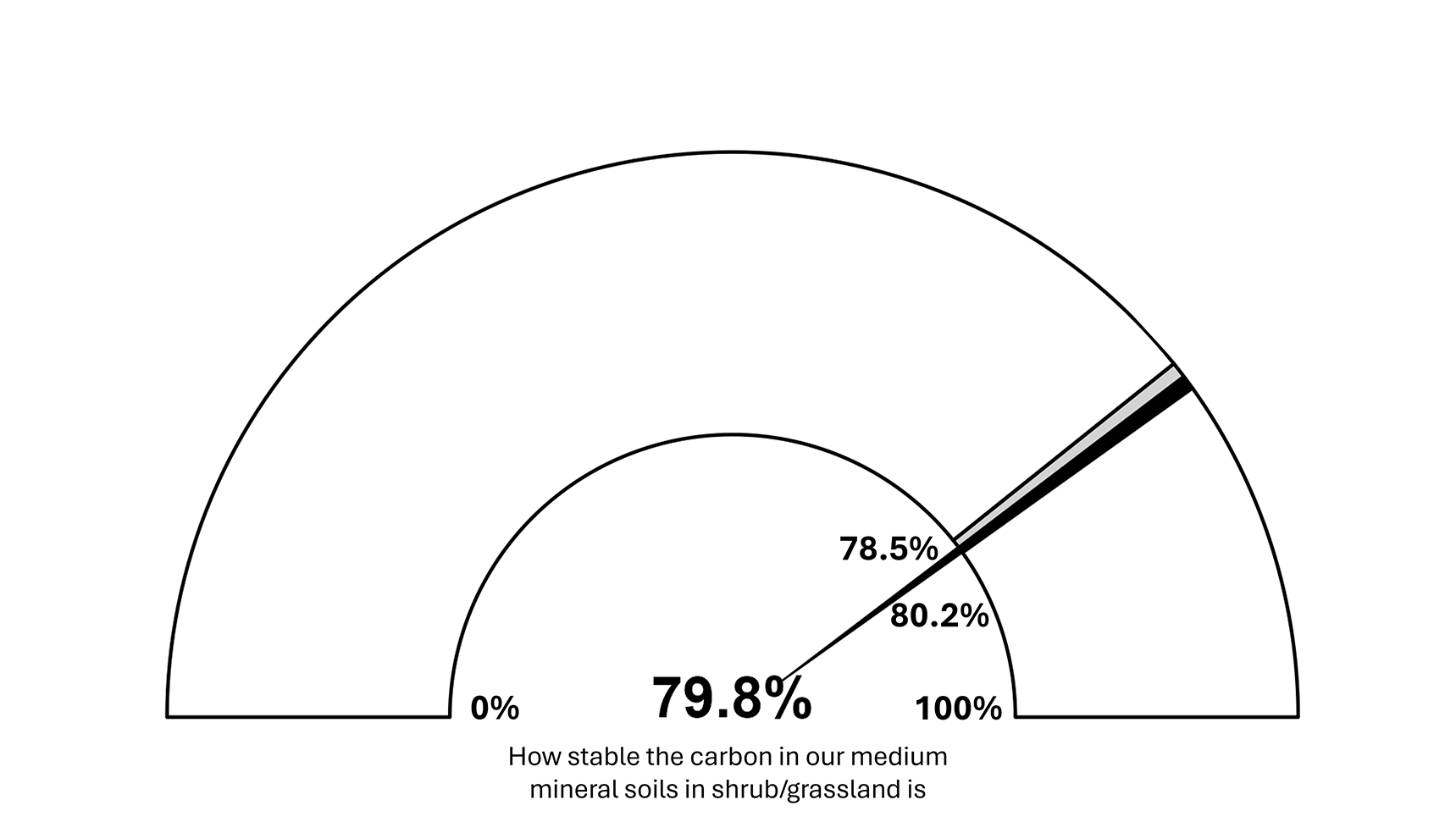
Figure 10. Modelled carbon stability results for medium mineral soils in shrub/grassland (n = 130). Note that future development work is planned to scope the incorporation of more management actions of relevance to non-cropland land use types, which may widen the grey range in future. An optimisation result is not provided as the current management data sources do not vary per soil type.
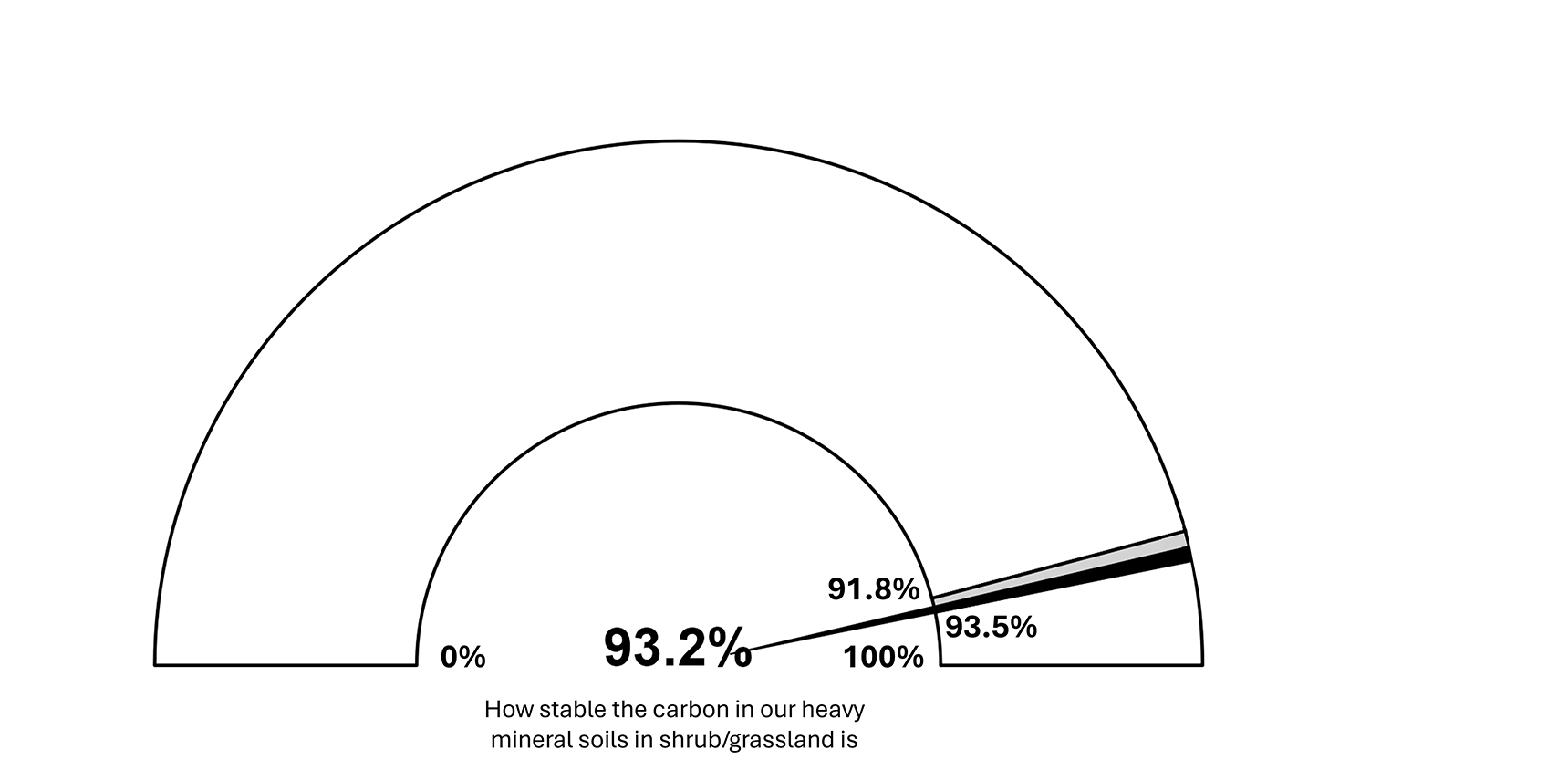
Figure 11. Modelled carbon stability results for heavy mineral soils in shrub/grassland (n = 126). Note that future development work is planned to scope the incorporation of more management actions of relevance to non-cropland land use types, which may widen the grey range in future. An optimisation result is not provided as the current management data sources do not vary per soil type.
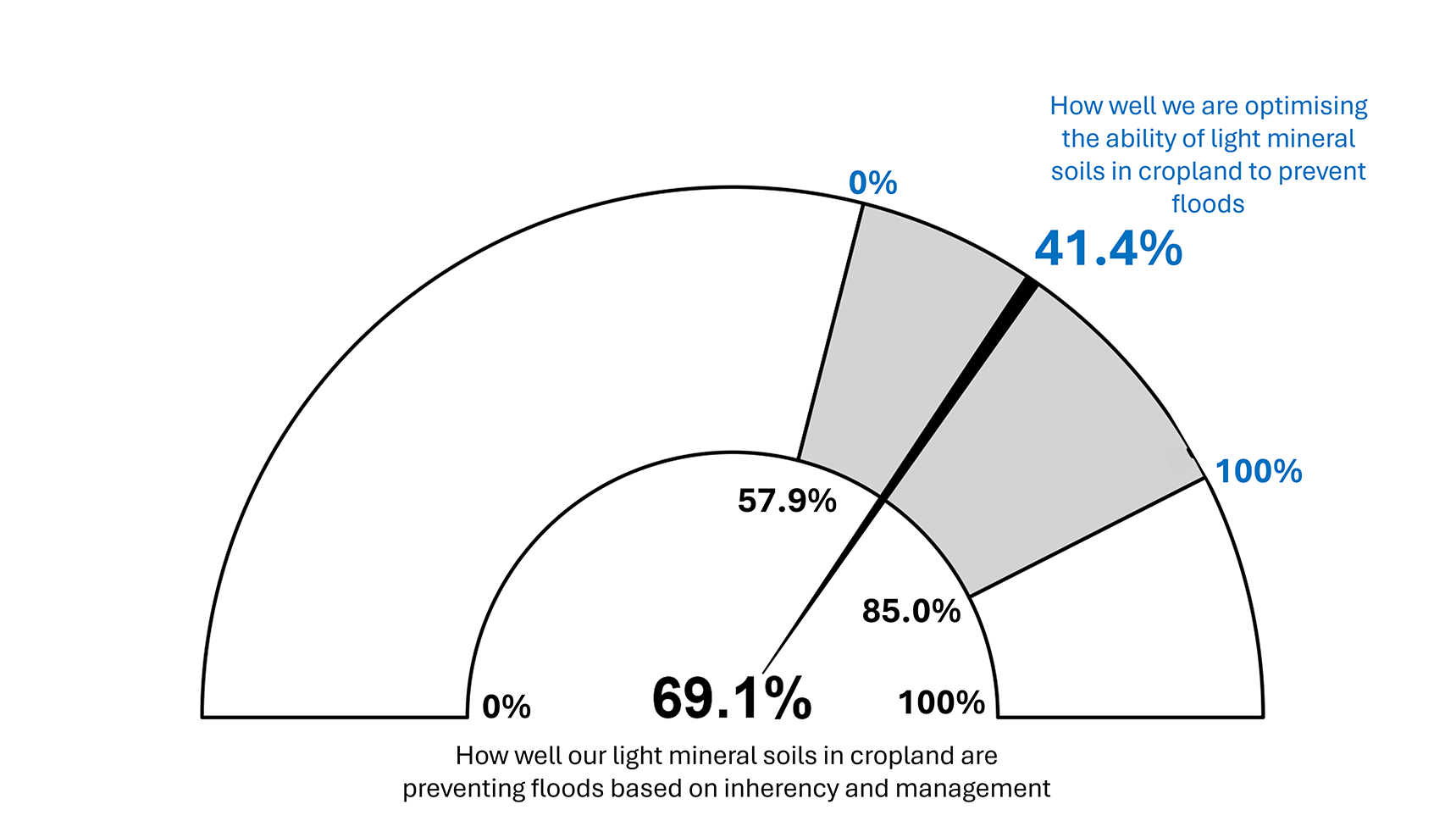
Figure 12. Modelled runoff reduction results for light mineral soils in cropland (n = 73).
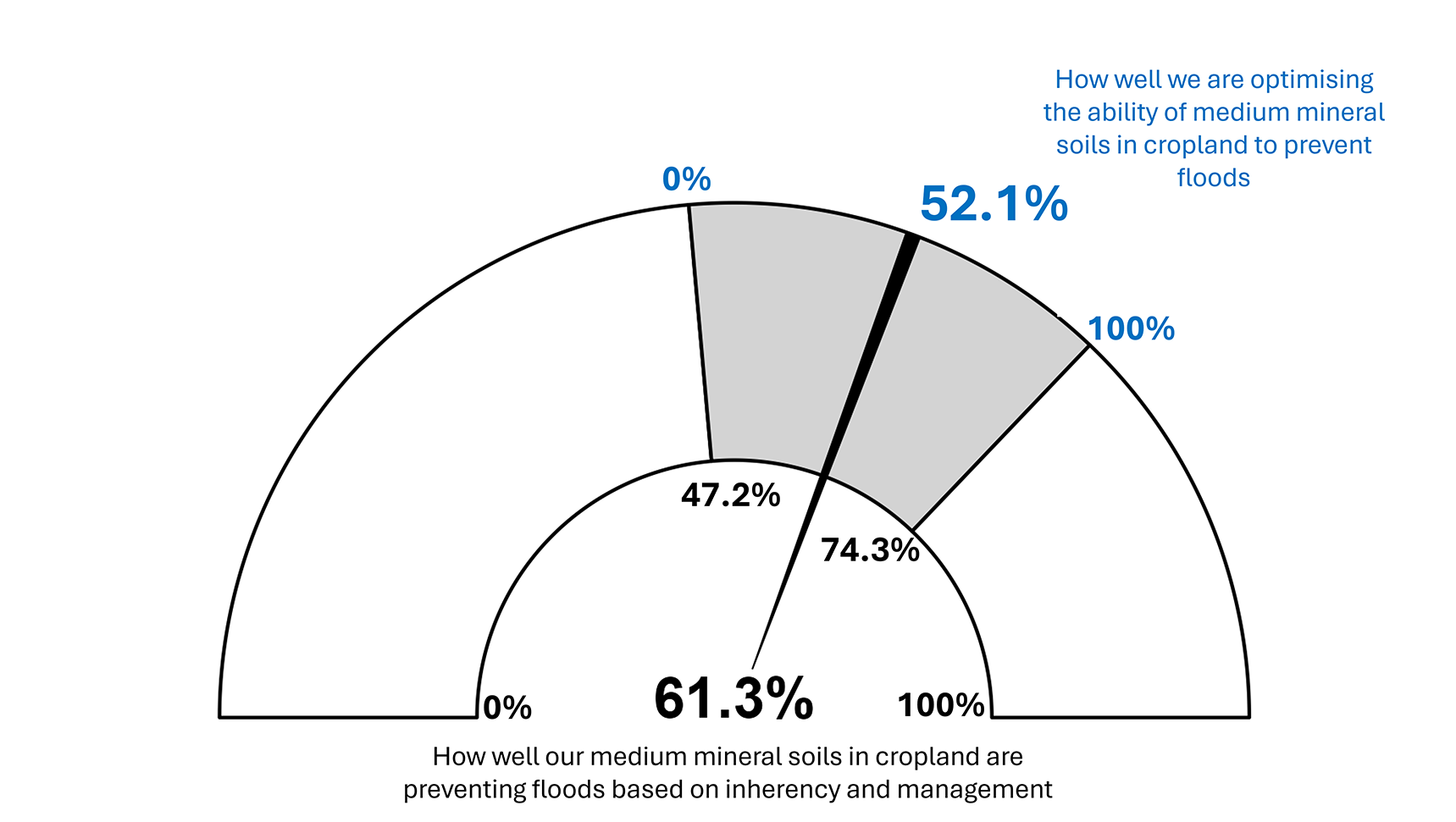
Figure 13. Modelled runoff reduction results for medium mineral soils in cropland (n = 84).
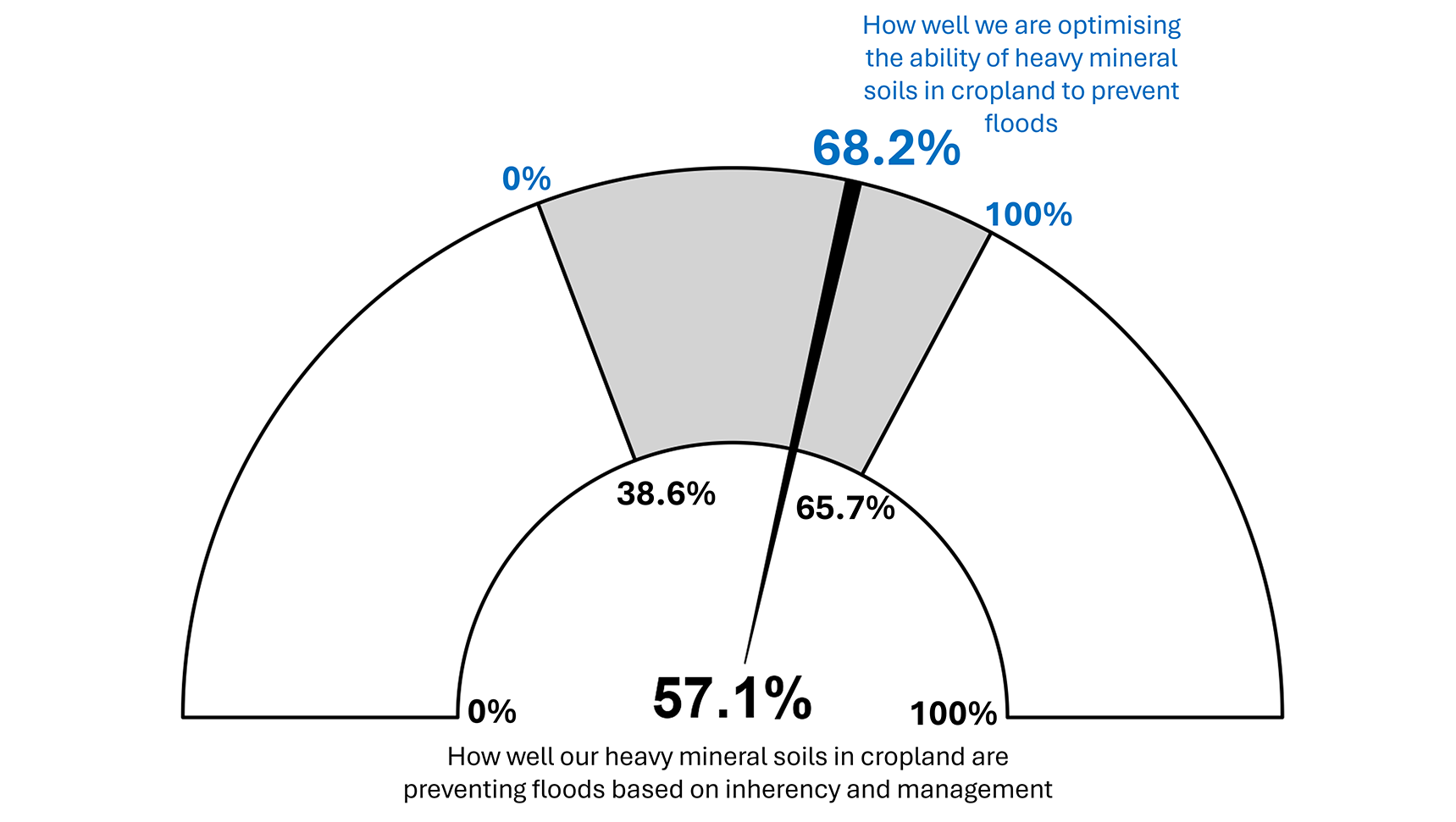
Figure 14. Modelled runoff reduction results for heavy mineral soils in cropland (n = 71).
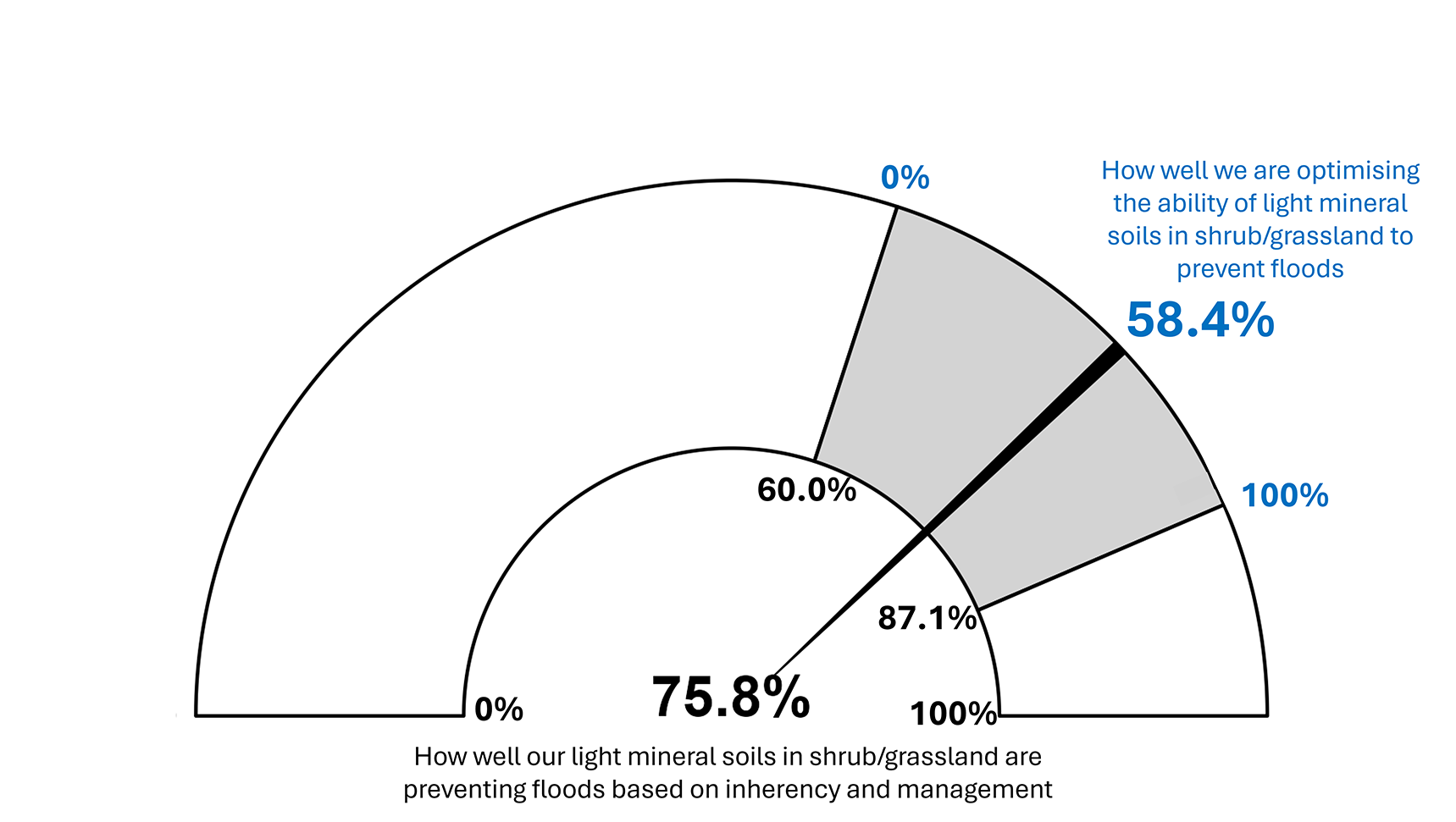
Figure 15. Modelled runoff reduction results for light mineral soils in shrub/grassland (n = 59).
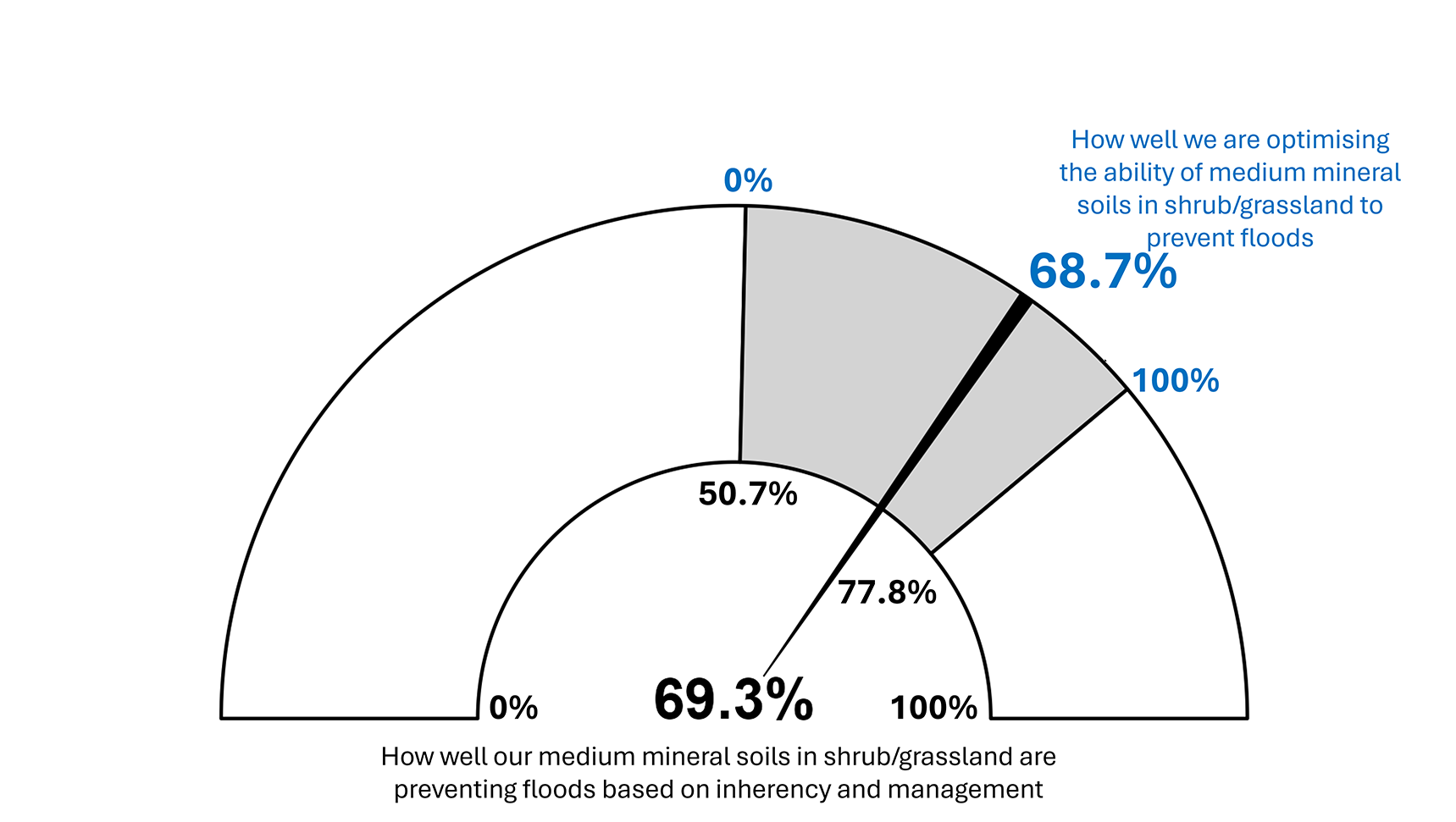
Figure 16. Modelled runoff reduction results for medium mineral soils in shrub/grassland (n = 144).
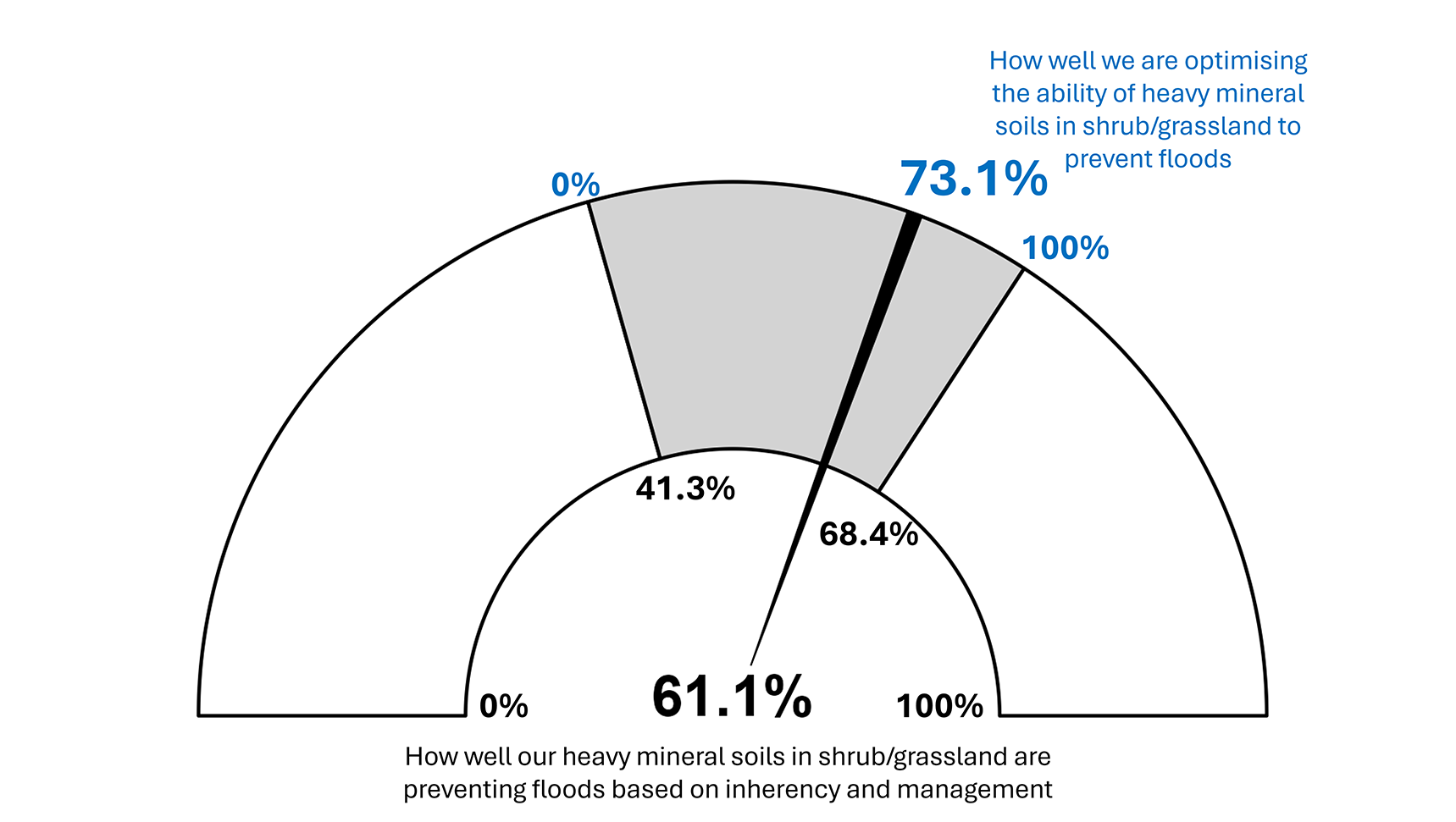
Figure 17. Modelled runoff reduction results for heavy mineral soils in shrub/grassland (n = 120).
Caveats, limitations and uncertainties
For accurate interpretation of the results presented within these statistics, it is necessary to understand the following caveats:
- Limitations of the interim field datasets that are being used in this initial, interim publication:
- The EES operates as a five-year rolling survey, with monads (1 km2 sampling units) selected through stratified random sampling based on ITE Land Class and adjusted for rare classes of interest. Certain areas – such as dense urban zones, large water bodies (> 2 ha), NFI woodlands, and land below Mean High Water – are excluded. Interim results may over- or under-represent some land classes until the cycle is complete. Potential sampling bias arising from landowner permission has not yet been assessed. This dataset reflects only a partial subset of the full set of samples planned in the survey’s strategic sample design and is supplied as a partial dataset for experimental use. Additional years of data collection and publication will follow, at which point a fully representative sample will be available. Thus, this interim dataset is not entirely representative of the whole target population and may contain an element of bias, which may make it not suitable for all intended analytical purposes. In addition, the modelling works on the assumption that the EES’s representativeness by land type can be equated to representativeness of soil types, which may not necessarily be the case and should be investigated in further work. No weightings to correct for this have been applied in the current work, so results should be treated as demonstrative only at this stage.
- At the analysis stage, for the purposes of this statistic, some further land types, including saltmarsh, fen and littoral land types, are additionally excluded in the current results due to low numbers of sampling points, meaning specifying their different functionalities within the models was not efficient. Additionally, woodland soil data is being collected through a separate NCEA monitoring programme (NFI+), which we intend to integrate into the indicator in future but is not included at this stage.
- Modelling assumptions:
- The models are limited to considering only the variables detailed in the technical documentation. Whilst other factors will undoubtedly affect soil health, the models assume that this is not the case. Variables were included where clear evidence of their effect could be found, and excluded where this was not the case (see the technical documentation for detail on justifications for these decisions).
- All variables within the models are grouped into categorical states. For example, land cover in the carbon models is grouped into ‘tree cover’, ‘shrub/grassland’ and ‘cropland’, and soil moisture into ‘high,’ ‘medium’ and ‘low’. The models are assuming that anything within the same category (e.g. something at the top end of ‘medium’ and something at the bottom end of ‘medium’) will respond in the same way. This limits the sensitivity of results. It is hoped that future development work will increase the number of categories available, thereby increasing the sensitivity of the models.
- The thresholds to define these categorical states have been defined based on literature review and expert input, based on current conditions. It is planned that future development work will consider the appropriateness of these thresholds in the context of projected future changes, such as climate change.
- The relationship between the variables in the models is defined within the conditional probability tables based on information found within the literature or through the expert panel processes. As described in more detail in the technical documentation, the general assumptions are that the relationships between parent and child nodes are ‘linear’ (in terms of step changes between the categories for each variable), and that the combined effect of parent variables on the ecosystem service is additive. Exceptions to these assumptions are accounted for where evidence was found to justify this. For example, if it is found that variable ‘a’ interacts with variable ‘b’ to give a non-linear response, then this has been defined.
- Unless the literature review or expert panel process pointed to differences in the magnitude of impacts between variables, then they are assumed to be equal to one another (e.g. variables ‘c’, ‘d’, ‘e’ have an equal effect on ES delivery because there is no evidence to suggest otherwise). However, if it is considered that variable ‘x’ has twice as large an effect size on ES delivery as variable ‘y’, this has been defined.
- The (absolute and relative) magnitudes and direction of effect of each individual node in the model, as well as any interactions (which combine to generate the final model results) were first determined by literature review and the expert panel process, and later calibrated by experts, as described in further detail in the technical documentation. These effect sizes cannot be directly measured. Therefore ultimately, the results represent probability estimates of soils’ contribution to ecosystem service delivery, based on model dynamics seen as plausible and defensible by experts (and as suggested by literature review), rather than precise or ‘true’ probabilities.
- Soils contribute to a wider range of ecosystem services than those presented here. For example, drought regulation, climate regulation through control of greenhouse gases beyond carbon, and soils’ contribution to human health are not considered within the current results.
- The models combine spatial and non-spatial data, and assume that these data can be treated in the same way. For example, sampled spatial data are used to derive the probability of a given location having high, medium, or low values for those data, while surveyed non-spatial data on farm management practices are used to determine the same thing. However, there may be patterns in the non-spatial data that are particular to nodes in the spatial data which were not picked up by the DAG, representing a limitation in the model.
- Variables not covered by the EES have been supplemented by using location data for EES plots to extract values for spatial data at those locations using terra’s “extract” function on raster datasets (Hijmans 2025) and sf’s “st_join” function on vector datasets (Pebesma 2018). There are inherent uncertainties associated with these functions and with the accuracy of both the plot location data and the spatial input datasets. This is mitigated through a data cleaning process that removes data that were considered impossible to achieve on EES locations, such as rock land cover types and bog land cover types with mineral soils.
- The models are fit to the input data by creating CPTs for root nodes that follow the distribution of the input data (for example, if 30% of the input data for the node has value “high”, the CPT assigns the data a 30% probability of being “high”). However, no method was found in the functions used to allow the model to incorporate the likelihood of certain combinations of data – for example, that crop rotation will always be ‘absent’ on non-cropland land cover types, or that there are no instances of locations with land cover type ‘bog’ with ‘mineral’ soils. To mitigate against this limitation (whereby when simulations of the model are generated for the querying functions they may include runs with instances of these ‘impossible’ combinations together), the water and carbon models are each run on different subsets of the full dataset (see the technical documentation for details). This method of running the model on subsetted data also means that the conditional relationships in the water model are captured in accurate proportions. For example, there is a conditional relationship between land cover and peaty/mineral soil type whereby the impact that land cover has on model results is dependent on whether that land cover is found on peaty or mineral soil types. 'Peaty' soils with ‘tree cover’ as the land cover, for example, are less likely to contribute to reduction of runoff risk than ‘mineral’ soils with 'tree cover'. While these are two separate nodes in the model, the CPTs are constructed so that they effectively work as one node with a combined effect on model results. Doing two separate water model runs with different input datasets (peaty and mineral) means that the land cover types are distributed accurately across the peaty and mineral datasets (e.g. if there were 5 data points for tree cover in the peaty data and 50 in the mineral data, the corresponding model run (peaty/mineral) would be fit only to the relevant data, rather than all 55 of the tree cover data points being randomly matched up to either peaty or mineral soil types in a combined model run). Consequently, this conditional relationship is represented in the correct proportions. Alternative methods to overcoming these potential limitations are also being investigated, such as running the model on a site-by-site basis by setting the evidence in the query to the input data values at each plot location.
- In some cases, inputs use quite variable dates. This is based on the most recent data that are available but does present an additional caveat around how representative results are of the time period being analysed.
- There is some inconsistency in how each of the three models are run compared to each other. This is due to differences in scope between what each cover and is explained in further detail in the technical documentation.
To discuss the data and methods, caveats, limitations and uncertainties associated with this indicator under development, please contact the development team at the Joint Nature Conservation Committee.
References
British Survey of Fertiliser Practice. 2024. Defra. [Accessed 6 November 2025].
Farm Practices Survey. 2010. Defra. [Accessed 6 November 2025].
Harris, M., Deeks, L., Hannam, J., Hoskins, H., Robinson, A., Hutchison, J., Withers, A., Harris, J., Way, L. & Rickson, J. 2023. Towards Indicators of Soil Health. JNCC Report 737 (Project Report), JNCC, Peterborough, ISSN 0963-8091.
Hijmans, R. 2025. raster: Geographic Data Analysis and Modeling. R package version 3.6-32, https://github.com/rspatial/raster
Kirkby, M.J., Jones, R.J.A., Irvine, B., Gobin, A, Govers, G., Cerdan, O., Van Rompaey, A.J.J., Le Bissonnais, Y., Daroussin, J., King, D., Montanarella, L., Grimm, M., Vieillefont, V., Puigdefabregas, J., Boer, M., Kosmas, C., Yassoglou, N., Tsara, M., Mantel, S., Van Lynden, G.J. and Huting, J. 2004. European Soil Bureau Research Report No.16, EUR 21176, 18pp. and 1 map in ISO B1 format. Office for Official Publications of the European Communities, Luxembourg
Kirkby, M.J., Irvine, B.J., Jones, R.J.A., Govers, G. & PESERA team. 2008. The PESERA coarse scale erosion model for Europe. Model rationale and implementation, European Journal of Soil Science, 59(6), 1293-1306.
Land Cover Map 2023 (land parcels, GB): Morton, R.D.; Marston, C.G.; O’Neil, A.W.; Rowland, C.S. (2024). Land Cover Map 2023 (land parcels, GB). NERC EDS Environmental Information Data Centre. https://doi.org/10.5285/50b344eb-8343-423b-8b2f-0e9800e34bbd.
Natural England. 2017. Likelihood of Best and Most Versatile Agricultural Land. Natural England. [Accessed 7 November 2025].
Natural England. 2025. England Ecosystem Survey Year 1 Data. [Accessed 16 December 2025].
OS Terrain 50 DTM, © Crown copyright. [Accessed 28 October 2025].
Pebesma. 2018. Sf: Simple features for r. https://CRAN.R-project.org/package=sf. R package version 0.6-1.
Soil Water Index. European Union's Copernicus Land Monitoring Service information. [Accessed 28 October 2025].
Upcott, E.V., Henrys, P.A., Redhead, J.W., Jarvis, S.G. & Pywell, R.F. 2023. A new approach to characterising and predicting crop rotations using national-scale annual crop maps, Science of the Total Environment, 860, 160471. https://doi.org/10.1016/j.scitotenv.2022.160471.
Published:
Reviewed: