
For this year's UN International Day of Clean Air for Blue Skies, in our latest blog post we are highlighting the connection between nature and human health. Air pollution is not just a human health issue, it affects nature, and the two are closely connected. The air we breathe links the health of people, wildlife and habitats.
PM2.5 and its impact on human health and nature
Many people are familiar with particulate matter 2.5 (PM2.5), tiny airborne particles that can be inhaled deep into our lungs and enter the bloodstream. PM2.5 is associated with a range of health impacts, including respiratory and cardiovascular disease, and dementia.
While some PM2.5 is emitted directly from sources such as transport and industry, ammonia also plays an important role. In the atmosphere, ammonia reacts with other pollutants to form PM2.5, contributing to the fine particle pollution that affects communities across the UK. Recent Clean Air for Nature survey results found that 69% of 2,000 UK adults were unaware that ammonia contributes to PM2.5 formation.
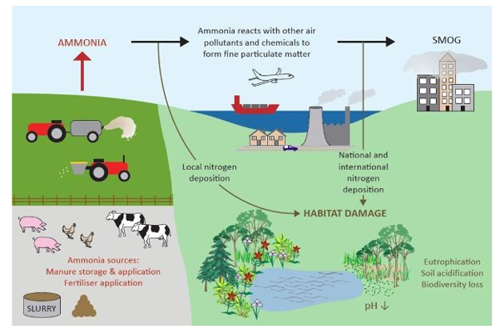
Figure 1: Environmental impacts of ammonia and other emissions (image source: 4.5: Measurement of Gaseous Emissions from Animal Housing – Engineering LibreTexts; shared under a CC BY 4.0 license).
Decreasing PM2.5 through ammonia reduction
Research suggests that reducing ammonia emissions could significantly improve air quality. Studies have shown that lowering ammonia can reduce levels of harmful PM2.5 particles by between 20% and 60%,and may be more effective than reducing some other air pollutants alone. Because ammonia reductions can be achieved at a lower cost, tackling ammonia offers a practical way to deliver benefits for both public health and nature.
Sources of ammonia in the UK include agriculture, such as livestock manure and fertiliser use, along with road transport emissions and waste including composting, landfill, sewage sludge decomposition and waste incineration. Nitrogen is lost as ammonia from organic manures (such as slurry, manure, litter, digestate, sludge and compost) when exposed to air, especially in warm or windy conditions. It can also be lost from manufactured fertilisers during spreading. These losses reduce fertiliser effectiveness and value. Reducing ammonia emissions can help retain more nitrogen, reducing the amount of manufactured fertiliser needed.
Ammonia is well known for its direct impacts on nature (not through PM2.5). When deposited onto habitats such as heathlands, bogs and species-rich grasslands, it can act like an unwanted fertiliser, altering soil chemistry and favouring a small number of fast-growing plants. Over time, this can reduce biodiversity and damage some of our most sensitive habitats.
Benefits to nature
Lower ammonia emissions can help protect wildlife-rich habitats from nitrogen pollution, support nature recovery, and reduce biodiversity loss. At the same time, they can contribute to lower levels of PM2.5, helping to improve the air we all breathe.
Healthy ecosystems also provide important benefits to people. They help store carbon, regulate water, support pollinators that contribute to food production, and provide green spaces that improve our wellbeing. When air pollution damages nature, these benefits can be reduced. Protecting ecosystems from pollution is therefore an investment in both environmental and human health.
What can you do?
The good news is that everyone can play a part in reducing air pollution.
Here are some simple actions you can take:
- Walk, cycle or use public transport where possible instead of driving.
- Reduce food waste by planning meals and using leftovers.
- Consider incorporating more plant-based meals into your diet.
- Support sustainable farming and food production.
- Reduce unnecessary consumption and follow the principles of refuse, reduce, reuse and recycle.
- Learn more about air pollution and share what you know with friends and family.
There is only one atmosphere: the same pollutants that affect our health can also harm the wildlife and ecosystems we depend upon. By tackling air pollution, we can help create cleaner air, healthier communities and a thriving natural environment for future generations.
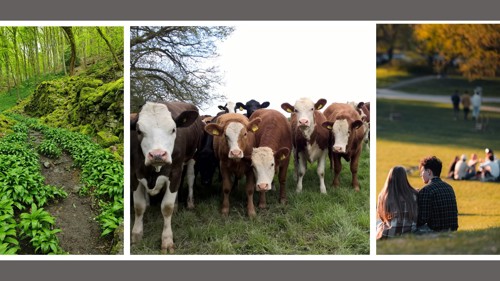
Figure 2: Images courtesy of JNCC and Krystian-Baran.
Building the evidence for cleaner air and healthier ecosystems
JNCC works with partners across the UK to improve understanding of how air pollution affects nature and how ecosystems recover when pollution pressures are reduced. Through the Air Pollution Recovery Indicators (APRI) programme, JNCC is developing new ways to measure recovery from air pollution and track progress towards nature recovery goals. JNCC also contributes to the 'Get an Air Pollution Assessment service' (also known as the UK Air Pollution Assessment Service (UK APAS)),which provides evidence and tools to help assess the impacts of air pollution on habitats and species. Alongside this, JNCC is helping to develop Decision Making Thresholds (DMT) that can support more effective management of air pollution risks by identifying levels of pollution at which action may be needed to protect sensitive habitats. Together, these initiatives help translate science into practical action for cleaner air and healthier ecosystems.
To learn more about air pollution and its impacts on nature, visit JNCC's Clean Air for Nature webpage.
Published: