
Find out the latest from JNCC from Armenia, where we're attending the 17th Conference of Parties to the Convention on Biological Diversity (CBD COP17).

From 19 to 30 October, delegates from across the world are meeting in Armenia for the 17th meeting of the Conference of the Parties to the Convention on Biological Diversity (CBD COP17). With 'Taking Action for Nature' as its central theme, this meeting of signatories to the UN Convention on Biological Diversity will conduct the first collective evaluation of progress made on the 23 targets of the Kunming-Montreal Global Biodiversity Framework (KMGBF), agreed in Montreal nearly four years ago.
We'll be providing more information about our work at COP17 in the coming days and weeks, so come back again soon to keep up-to-date.
Contents
- 30 October 2026: Delegation Diary update from JNCC's negotiating team
- 29 October 2026: Delegation Diary update
- 28 October 2026: Delegation Diary update
- 27 October 2026: Delegation Diary update (Part 2)
- 27 October 2026: Delegation Diary update (Part 1)
- 26 October 2026: Delegation Diary update
- 24 October 2026: Delegation Diary update from our Chair, Dr David Cooper
- 23 October 2026: Delegation Diary update
- 21 October 2026: Delegation Diary update
- 15 October 2026: Meet JNCC's COP17 Team
- 12 October 2026: How will JNCC's COP17 Team be supporting global negotiations?
30 October 2026: Delegation Diary update from JNCC's negotiating team


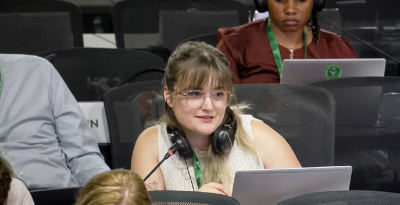
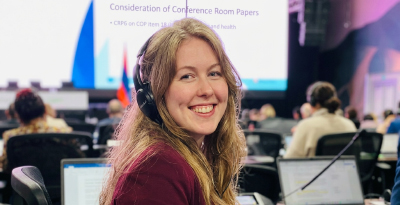
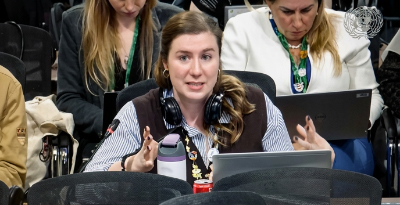
From Ambition to Action
Lucy Ellam, Leah Farquharson, Alyssa Fischer
Over the past two weeks at CBD COP17, we have had the opportunity to represent the UK across discussions on invasive alien species, biodiversity and health, biodiversity and agriculture, mainstreaming biodiversity across sectors, and the role of subnational governments, cities and local authorities.
Despite the breadth of issues under discussion, one theme consistently emerged: implementation. Regardless of the agenda item, Parties repeatedly returned to the same challenge: how do we turn the ambitions of the Kunming-Montreal Global Biodiversity Framework into meaningful action and measurable outcomes?
For JNCC, this question sits at the heart of our work. Across negotiations, formal interventions and informal discussions, there was a strong recognition that delivering the Framework will depend not only on political commitment, but also on access to robust evidence, practical tools and reliable monitoring to help track progress and inform decisions. Whether discussing invasive alien species, the links between biodiversity and human health, or the integration of biodiversity across sectors, countries were looking for ways to translate global commitments into action on the ground.
What struck us was not the diversity of views around the room, but the degree of agreement on the scale of the challenge ahead. Conversations frequently moved from technical discussions to broader questions of finance, capacity and governance, highlighting how interconnected biodiversity issues have become. A recurring message was that biodiversity cannot be addressed in isolation. Achieving the Framework's goals will require biodiversity considerations to be integrated across government, business and society.
This emphasis on implementation reinforced the importance of the scientific and technical foundations that underpin effective decision-making. Reliable evidence, monitoring and indicators are essential not only for understanding the state of nature, but also for assessing whether actions are delivering the intended outcomes. As countries move towards implementation, the need for accessible, policy-relevant science will become increasingly important.
COP17 also provided valuable insight into how multilateral negotiations work in practice. While decisions are ultimately agreed in formal sessions, some of the most productive exchanges took place in smaller groups and informal discussions. These conversations provided opportunities to share experiences, explore different perspectives and build consensus around complex issues.
Hearing from countries facing very different ecological, economic and social circumstances was particularly insightful. Despite differing national priorities, delegates consistently described biodiversity as fundamental to food security, health, livelihoods and cultural identity. Those discussions reinforced an important lesson: while countries may take different routes to implementation, they share a common ambition to secure positive outcomes for both nature and people.
As COP17 draws to a close, our strongest takeaway is that the challenge facing the Convention is no longer defining what needs to be done. The ambition is clear and the goals are agreed. The real test now is delivery. For organisations such as JNCC, that means helping ensure that governments and decision-makers have access to the evidence, expertise and partnerships needed to turn commitments into action and demonstrate measurable progress for nature. The collective determination to move from ambition to implementation has been one of the most encouraging themes of the past two weeks, and will be critical to the success of the Global Biodiversity Framework in the years ahead.
Photographs (from left to right): Lucy Ellam, Leah Farquharson and Aylssa Fischer, involved in various stages of the negotiations at CBD COP17.
29 October 2026: Delegation Diary update
Putting People at the Heart of Biodiversity Action
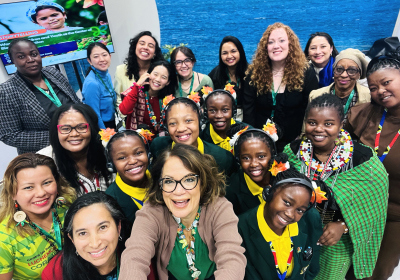 A clear message emerging from COP17 is that biodiversity goals will only be achieved if the people closest to nature are involved in delivering them. Speaking at the Women, Children and Youth at the Centre of Biodiversity Action event, Gemma Harper highlighted the vital role of women, young people, Indigenous Peoples and local communities in turning global commitments into action on the ground. Discussions reinforced that successful implementation depends on combining scientific evidence with local knowledge, experience and stewardship. The session also highlighted the importance of the UK’s Inclusive Nature Action Principles in supporting a whole-of-society approach to delivering the Global Biodiversity Framework.
From Ambition to Impact: Measuring Nature Outcomes
In a bilateral meeting with Erin Billman, Executive Director of the Science Based Targets Network (SBTN), Gemma Harper explored a growing challenge for biodiversity action: demonstrating that business commitments are delivering real outcomes for nature. Discussions focused on the role of indicators, monitoring and reporting in providing credible evidence of progress, and highlighted the importance of robust scientific expertise in ensuring nature-related claims are meaningful and measurable. For JNCC, the conversation reinforced the critical role of evidence in turning ambition into action and demonstrating real-world benefits for biodiversity.
Photograph: Dr Gemma Harper OBE, JNCC's Chief Executive, with participants at the Women, Children and Youth at the Centre of Biodiversity Action event.
28 October 2026: Delegation Diary update
Communities at the Heart of Conservation Success
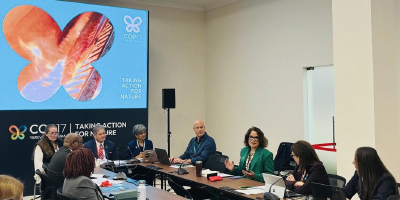 At a ministerial roundtable hosted by Panama's Minister of Environment, Juan Carlos Navarro, Dr Gemma Harper OBE highlighted Scotland's Fair Isle as a compelling example of how community-led conservation can deliver lasting benefits for both nature and people. Fair Isle demonstrates a lesson increasingly recognised around the world: conservation is most effective when local communities help shape decisions and share in the benefits. By combining local stewardship with strong evidence and a long-term commitment to nature recovery, communities can achieve positive outcomes for biodiversity while supporting resilient local economies and livelihoods. The conversation reinforced the importance of ensuring that protected and conserved areas deliver tangible benefits for people alongside biodiversity outcomes. As countries work to implement the Kunming-Montreal Global Biodiversity Framework, community leadership will remain central to achieving conservation success that is both effective and enduring.
Making Biodiversity Monitoring More Equitable
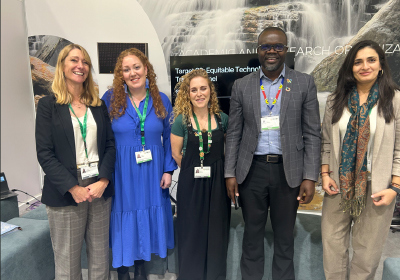 New technologies are transforming how biodiversity is monitored, but innovation alone is not enough. Long-term success depends on whether countries and communities have the skills, resources and support needed to use these technologies effectively. These themes were explored during a panel discussion linked to Innovate4Nature (I4N), a UKCEH-led programme funded by Defra that examines barriers and opportunities associated with adopting biodiversity monitoring technologies in low- and middle-income countries. Bethany Graves, JNCC's International Implementation Team Leader, contributed to the panel, drawing on JNCC's experience working with UK Overseas Territories and international partners to highlight the importance of ensuring technology transfer supports local priorities and delivers lasting benefits. The conversation highlighted the value of scientific collaboration, equitable data governance and meaningful involvement of Indigenous Peoples and local communities in designing and applying monitoring approaches. A consistent message was that technology is most effective when it is owned, understood and sustained by the people who use it, supported by long-term partnerships, investment and capacity building.
Measuring What Matters in Area-Based Conservation
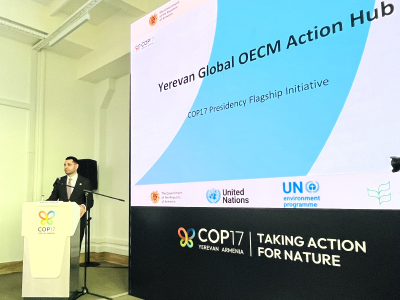 As countries work towards Target 3 of the Kunming-Montreal Global Biodiversity Framework, increasing attention is being given not only to how much land and sea is conserved, but whether those areas are delivering measurable benefits for biodiversity. Against this backdrop, Dr Gemma Harper OBE attended the launch of the Global OECM Action Hub, a COP17 Presidency initiative designed to help countries better identify, monitor and report on Other Effective Area-based Conservation Measures (OECMs) and understand how they contribute to biodiversity conservation in practice. For JNCC, this growing focus on conservation outcomes rather than simply coverage reflects the importance of using evidence to understand what is working and where improvements are needed. The Hub also provides opportunities to share learning from the development of OECM approaches in Scotland and Wales, contribute scientific expertise and help shape international good practice on evaluating conservation success.
Photographs (in event order):
- Dr Gemma Harper OBE, JNCC's Chief Executive, attending a ministerial roundtable event discussing how communities can be at the heart of conservation success.
- Bethany Graves, JNCC's International Implementation Team Leader at a UKCEH-led event exploring how to make biodiversity monitoring more equitable.
- H.E. Hambardzum Matevosyan, Minister of Environment of the Republic of Armenia and President of CBD COP17, launching the Global OECM Action Hub.
27 October 2026: Delegation Diary update (Part 2)
COP17 Launches New Platform for Mountain and Freshwater Ecosystems
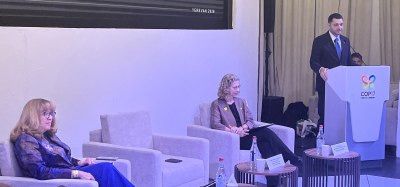 COP17 saw the launch of the Yerevan Platform on Mountains and Freshwater Ecosystems, a new initiative to strengthen international cooperation and drive action for ecosystems that are vital for nature, water security and climate resilience.
Dr Gemma Harper OBE, Chief Executive of JNCC attended the launch on behalf of the UK Government. The launch reflected a growing focus at COP17 on putting global commitments into practice. A key message from the High-Level Segment was that countries are more likely to succeed when action on biodiversity, climate adaptation and water management is planned and delivered together, rather than through separate approaches.
The discussions also highlighted the value of strong science and evidence in supporting implementation - UK expertise in environmental monitoring and freshwater ecosystems makes an important contribution to international efforts.
JNCC Shares UK Expertise on Linking Biodiversity, Climate and Land Action
JNCC contributed to the side event Rio Conventions in Synergy: From National Reporting to Joint Action, hosted by China, which explored how countries can deliver biodiversity, climate and land restoration goals in a more joined-up way.
Representing JNCC, Bethany Graves shared UK experience in marine protected area monitoring and international capacity-building, demonstrating how high-quality evidence can support multiple environmental goals while reducing reporting burdens.
The discussion reflected growing international interest in integrated monitoring and reporting systems that help countries move from commitments to action. It also highlighted the increasing demand for practical, evidence-based approaches, an area where UK expertise is helping to inform global efforts.
Photograph: The launch of the Yerevan Platform on Mountains and Freshwater Ecosystems event.
27 October 2026: Delegation Diary update (Part 1)
Championing Women's Leadership for Nature
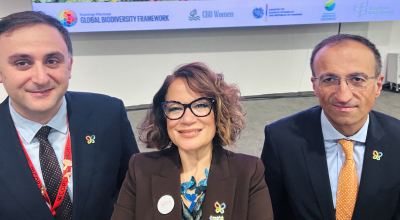 Dr Gemma Harper OBE, Chief Executive of JNCC, joined H.E. Aram Meymaryan, Deputy Minister of Environment and representative of the COP17 Presidency, and H.E. Arsen Torosyan, Armenia's Minister of Labour and Welfare, to open the Women Forum. Drawing on UK experience in biodiversity monitoring and evidence-based decision-making, Gemma highlighted the importance of ensuring biodiversity policies are informed by scientific evidence, local knowledge and lived experience.
The discussion explored how countries can strengthen the role of women in biodiversity leadership, policymaking and implementation. It highlighted the growing recognition that successful biodiversity action depends on inclusive leadership and ensuring diverse voices help shape decisions for nature.
Turning Global Biodiversity Commitments into Action
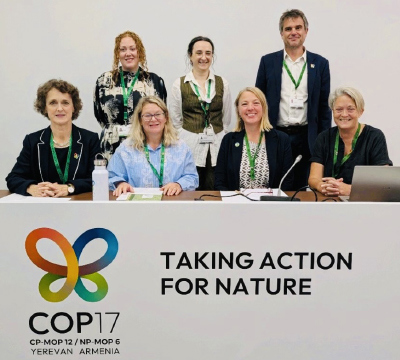 At the COP17 side event From Global Goals to National Law: UK Approaches to Delivering Biodiversity Targets, Bethany Graves, International Implementation Team Leader at JNCC, joined representatives from government, civil society and youth organisations to discuss how countries are translating biodiversity commitments into action.
Drawing on JNCC's role in supporting biodiversity monitoring, indicators and reporting across the UK's four countries, Bethany highlighted how these tools help governments understand whether actions are delivering results, identify where further effort is needed and track progress towards biodiversity goals. The discussion reflected growing international interest in practical approaches to implementing the Kunming-Montreal Global Biodiversity Framework and demonstrating real-world outcomes for nature.
Sharing UK Expertise on Freshwater Recovery
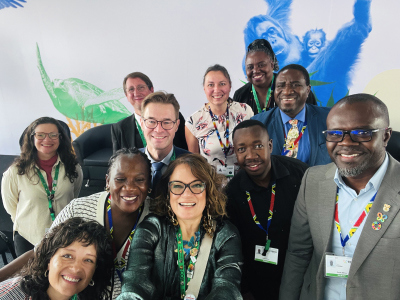 At a meeting of the Global Biodiversity Agencies Network (GBAN), Dr Gemma Harper OBE shared UK experience in freshwater ecosystem monitoring, conservation and restoration, highlighting how scientific evidence can support nature recovery.
Drawing on JNCC's expertise in biodiversity evidence and assessment, she showcased UK approaches used to understand the condition of rivers, lakes and wetlands and inform restoration efforts. The discussion demonstrated growing international interest in practical, science-based approaches to freshwater recovery and the value of sharing expertise to support the restoration of freshwater ecosystems around the world.
Photographs (in event order):
- Gemma Harper with H.E. Aram Meymaryan, Deputy Minister of Environment and representative of the COP17 Presidency, and H.E. Arsen Torosyan, Armenia's Minister of Labour and Welfare, at the Women Forum.
- Bethany Graves, JNCC (back left), with (from left to right): Elizabeth Burgess, Scottish Government; Karen Stothard, Welsh Government; Abi Gardner, GYBN UK; Craig Bennett, The Wildlife Trusts; and Rachel Sharp, Wildlife Trusts Wales; at the From Global Goals to National Law: UK Approaches to Delivering Biodiversity Targets event.
- Gemma Harper and others at a meeting of the Global Biodiversity Agencies Network (GBAN).
26 October 2026: Delegation Diary update
JNCC Showcases UK Innovation in Biodiversity Data and Disclosure
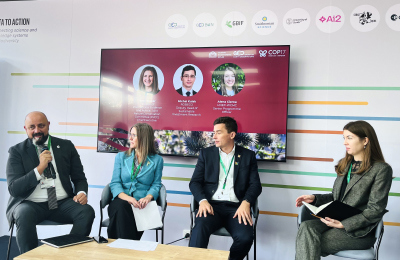 At the Bridging Public-Private Data to Accelerate Biodiversity Action side event, Beth Stoker, JNCC's Director of International Evidence and Advice, shared the UK's experience of combining biodiversity evidence with corporate disclosure data to support implementation of the Kunming-Montreal Global Biodiversity Framework. Beth highlighted the UK's long-standing approach to developing trusted biodiversity indicators through partnerships across government, research organisations, environmental NGOs and citizen scientists. JNCC also showcased its Biodiversity Disclosures Indicator and innovative work integrating corporate disclosure data, including information reported through CDP and the Taskforce on Nature-related Financial Disclosures (TNFD), into biodiversity monitoring and assessment. The indicator provides insight into how businesses are reporting and responding to biodiversity-related risks and opportunities, helping to track progress towards greater corporate accountability for nature. The session reflected growing international interest in how public biodiversity evidence and private-sector disclosure data can be used together to strengthen transparency, accountability and evidence-based decision-making. As countries seek practical ways to monitor progress towards global biodiversity goals, JNCC's work demonstrates how combining data from multiple sources can provide a richer understanding of biodiversity impacts, dependencies and action.
JNCC Attends the International Dialogue on Biodiversity Finance and Incentives
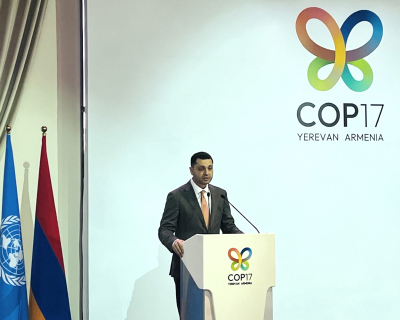 JNCC Chief Executive Dr Gemma Harper attended the High-Level Dialogue on Incentives Positive to Biodiversity, hosted by the Armenian Presidency and partners. The event marked the launch of three new initiatives designed to accelerate progress on Target 18 of the Kunming-Montreal Global Biodiversity Framework: the Yerevan Call on Incentives Positive to Biodiversity, the Friends of Target 18 coalition and the Yerevan Biodiversity Finance Challenge. The dialogue highlighted the importance of reforming incentives and financial flows that affect nature, a key component of global efforts to halt and reverse biodiversity loss. The launch of these initiatives demonstrated the Armenian Presidency's commitment to advancing international action on biodiversity finance and incentive reform, while encouraging greater collaboration between governments, financial institutions and development partners. During ministerial interventions, Botswana recognised the UK's support for this agenda, underlining the UK's continued commitment to advancing international action on biodiversity finance and incentive reform.
JNCC Highlights the Growing Importance of Nature-Related Risk at COP17
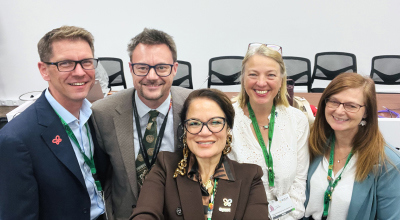 The role of business in addressing biodiversity loss continues to be a prominent theme at COP17, reflecting growing recognition that nature loss presents economic, operational and resilience risks alongside environmental impacts. At a UK Business and Biodiversity Forum side event, Dr Gemma Harper highlighted the UK's experience in assessing nature-related risks through the UK's Nature Security Assessment and explored how evidence can help organisations better understand and manage those risks. She emphasised the importance of translating existing commitments into action and delivering measurable outcomes for nature, society and the economy. The discussion examined how biodiversity disclosures can support greater corporate transparency and accountability, while informing investment decisions, supply chain management and business strategy. JNCC's contribution demonstrated how UK expertise in nature-related risk assessment, biodiversity monitoring and corporate disclosures can help businesses and investors identify, assess and manage nature-related risks more effectively. These discussions reinforced the growing recognition that biodiversity is not solely an environmental issue, but one that is increasingly relevant to economic resilience, business performance and long-term prosperity.
Photographs (in event order):
- From left to right: Pietro Bertazzi, Chief Policy and Growth Officer, CDP; Beth Stoker, Director of International Evidence and Advice, JNCC; Michal Kulak, Deputy Head of Sustainable Investment Research, ROBECO; and Coordinating Lead Author, IPBES Business and Biodiversity Assessment Chapter 4; Alena Cierna, Senior Programme Officer, UNEP-WCMC at the CPD Bridging Public-Private Data event.
- COP17 President Hambardzum Matevosyan, Armenia’s Minister of Environment, opening the high level event on target 18.
- Gemma Harper (centre) with (from left to right) Mark Johnston and Paul Harrison (UKBBF); Katie-Jo Luxton (RSPB), and Paula Harrison (UKCEH) at the UK Business and Biodiversity Forum side event Business Action for Nature: Turning Science and Policy into Practice'.
24 October 2026: Delegation Diary update from our Chair, Dr David Cooper
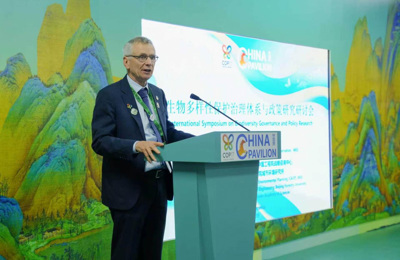
Science must remain at the heart of delivery
One of the clearest messages to emerge from COP17 is that effective action for nature must continue to be built on strong scientific evidence.
Speaking at an event on the evolving role of science, academia and research within the CBD, Dr David Cooper, JNCC’s Chair and former Acting Executive Secretary of the Convention on Biological Diversity (CBD), reflected on the central role science has played throughout the Convention's history. Scientific evidence has helped identify the causes of biodiversity loss, informed global biodiversity targets and underpinned the development of the KMGBF itself.
Discussions also highlighted the need for greater interdisciplinarity and plurality in biodiversity research and decision-making. Social sciences are essential for understanding the economic, cultural, behavioural and governance factors that shape biodiversity outcomes. Delivering the Framework will require bringing together diverse disciplines, knowledge systems and forms of evidence.
As countries begin assessing progress towards the Framework's 2030 targets, the challenge is no longer generating evidence but ensuring it informs policy, investment and implementation. JNCC contributes directly to this through the development of evidence, indicators and assessments that help governments understand biodiversity change, track progress and support effective action for nature.
Indigenous leadership moves to the centre of biodiversity action
Another defining theme of COP17 has been growing recognition of the leadership role of Indigenous Peoples and local communities (IPLCs).
At a dialogue organised by the Fund for the Development of Indigenous Peoples of Latin America and the Caribbean (FILAC), participants highlighted evidence showing that Indigenous-managed lands are often among the most biodiverse and best-conserved ecosystems in the world.
Dr Cooper emphasised the importance of bringing together scientific and Indigenous knowledge systems. Across the conference, Indigenous Peoples and local communities are increasingly being recognised not simply as stakeholders in biodiversity policy, but as partners and leaders in delivering conservation outcomes.
The discussions reflected a wider shift in global biodiversity policy: successful implementation depends on recognising and supporting the knowledge, stewardship and governance approaches that have sustained biodiversity for generations.
Youth leadership helping drive biodiversity action
At the Global Youth Biodiversity Network (GYBN) Youth Summit, Dr David Cooper thanked young people for their leadership in shaping the KMGBF and for the role they continue to play in supporting its implementation.
Discussions highlighted the importance of youth participation in biodiversity decision-making at national and global levels, alongside Indigenous Peoples, women's groups and wider civil society. Participants emphasised that intergenerational equity and justice must remain at the heart of implementation, ensuring biodiversity action reflects the interests of both present and future generations.
The summit reinforced a clear message: delivering the Global Biodiversity Framework will require collaboration across generations, sectors and knowledge systems, bringing together diverse voices to help sustain ambition and drive action for nature.
Closing the biodiversity finance gap remains a global challenge
At an OECD-hosted event on biodiversity incentives and finance, Dr Cooper highlighted the importance of robust and internationally comparable indicators for tracking progress under Targets 18 and 19 of the Global Biodiversity Framework.
Effective indicators are essential for demonstrating whether investment in nature is increasing, harmful incentives are being reduced and countries are making progress towards their biodiversity commitments. JNCC's work on biodiversity monitoring and indicators helps provide the evidence needed to assess whether policies, incentives and investments are delivering positive outcomes for nature.
A recurring theme throughout discussions was the need to address both sides of the finance equation. Increasing investment in nature is essential, but so too is identifying and reforming incentives and subsidies that continue to drive biodiversity loss. Delegates repeatedly returned to the conclusion that closing the biodiversity finance gap will require action across the whole economy, combining public investment, private finance and economic reforms that better support nature-positive outcomes.
From global ambition to national implementation
Across COP17, there is a growing focus on what implementation looks like in practice.
At a biodiversity governance event in the China Pavilion, Dr Cooper highlighted the importance of whole-of-government and whole-of-society approaches to implementing the Global Biodiversity Framework. Participants explored how countries can embed biodiversity considerations across planning, policy and economic decision-making.
Examples from China illustrated how biodiversity objectives can be integrated within national planning, legislation and development frameworks, including through the Ecological Conservation Redline System and the recently adopted Ecological and Environmental Code.
The discussions reinforced a broader lesson emerging across the conference: biodiversity outcomes improve when nature is embedded across systems of governance and development, rather than treated as a stand-alone environmental issue.
Transformative change is becoming unavoidable
The concept of transformative change has featured prominently in biodiversity discussions for several years. At COP17, it is increasingly being discussed as a practical necessity rather than a long-term aspiration.
At an event hosted by SNAP Québec, participants explored the economic, social and governance systems that influence decisions affecting nature. Drawing on findings from the Intergovernmental Science-Policy Platform on Biodiversity and Ecosystem Services (IPBES), discussions focused on the scale of change required to achieve the ambitions of the Global Biodiversity Framework.
Dr Cooper highlighted examples that encourage longer-term thinking, including community-led stewardship approaches and the Well-being of Future Generations (Wales) Act 2015.
The discussion underscored a growing recognition that reversing biodiversity loss will require changes across the economic, social and governance systems that shape decisions affecting nature.
Photograph: Dr David Cooper, JNCC Chair, at a biodiversity governance event in the China Pavilion.
23 October 2026: Delegation Diary update
From Participation to Influence: Rethinking Youth Engagement in Biodiversity Governance
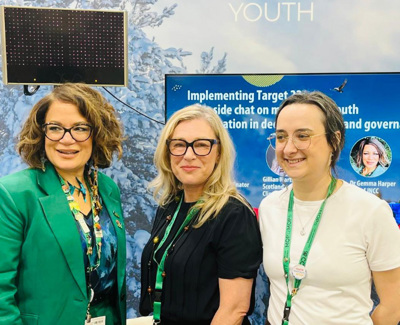 How can organisations show that young people are influencing biodiversity decisions, rather than simply being invited into the conversation?
That question was at the heart of a fireside chat hosted by the Global Youth Biodiversity Network (GYBN) UK in the Youth Pavilion, where JNCC Chief Executive Dr Gemma Harper joined Gillian Martin MSP, Cabinet Secretary for Climate Action and Rural Affairs, Scottish Government, to discuss implementation of Target 22 of the Kunming-Montreal Global Biodiversity Framework.
The discussion focused on a growing challenge for biodiversity governance: moving beyond participation to influence. As opportunities for young people to engage have expanded, attention is increasingly turning to how their contributions shape policies, priorities and decisions.
Drawing on JNCC's experience in evidence-based decision-making and youth engagement, Gemma highlighted the importance of transparency, accountability and clear routes for young people to influence biodiversity policy and practice. The conversation reflected a growing expectation that success should be measured not only by who is involved, but by how their input is reflected in outcomes.
Ensuring Small Island Voices Are Heard
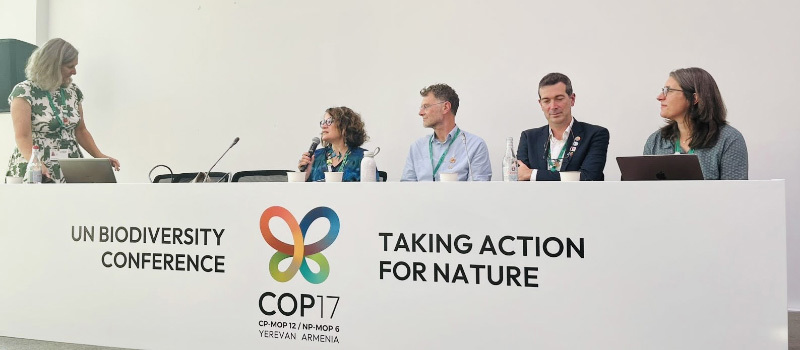
A side event on the UK Overseas Territories highlighted both their importance to global biodiversity and the value of ensuring their experience informs international discussions.
Hosted by the UK Centre for Ecology & Hydrology (UKCEH), the session explored lessons from the Territories on invasive species management, ecosystem restoration, area-based conservation and biosecurity. Home to globally significant biodiversity, the Territories continue to demonstrate what effective conservation delivery looks like in practice.
As a panellist, Gemma highlighted the importance of combining locally led action with robust science, long-term partnerships and sustained investment. Discussions emphasised the value of local knowledge and practical experience alongside scientific evidence.
Given the UK Overseas Territories' significant contribution to global biodiversity, the discussion highlighted the value of ensuring that their experience, expertise and perspectives are represented in international biodiversity discussions.
What Can Animal Culture Teach Us About Conservation?
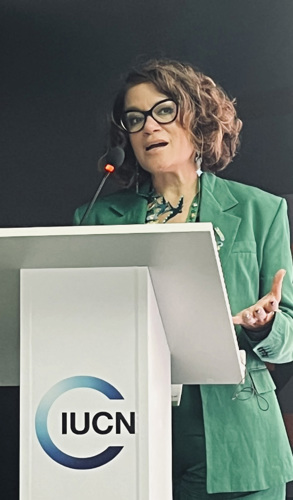 Can animals pass knowledge from one generation to the next, and what might that mean for conservation?
That was the focus of a thought-provoking event at the IUCN Pavilion, where Gemma delivered a keynote address on the emerging science of animal culture.
Researchers are increasingly finding evidence that some species learn behaviours socially and pass them between generations, influencing how they find food, migrate and respond to environmental change. These discoveries are prompting new questions about how species adapt and what contributes to their resilience.
Drawing on JNCC's role in biodiversity evidence and monitoring, Gemma explored how these emerging insights could complement established approaches to species conservation and ecosystem recovery. While the science continues to evolve, the discussion highlighted the potential for new evidence to reshape understanding of how species survive and adapt in a changing world.
Photographs (in event order):
- Gemma Harper with Gillian Martin MSP, Cabinet Secretary for Climate Action and Rural Affairs and Abi Gardner, GYBN UK.
- Helen Roy (UKCEH), Gemma Harper (JNCC), Leigh Morris (UKOTCF), Kevin Smith (IUCN), Aileen Mill (Newcastle University)
- Gemma Harper speaking at the IUCN side event on animal culture.
21 October 2026: Delegation Diary update
Turning Biodiversity Commitments into Action
At the Biodiversity Conservation for a Beautiful China event, JNCC Chief Executive Dr Gemma Harper highlighted the crucial role of biodiversity evidence in helping countries turn global commitments into measurable action for nature. As nations work to implement the Kunming-Montreal Global Biodiversity Framework, she shared insights from JNCC's work on biodiversity monitoring, indicators and assessment, demonstrating how robust evidence can help governments understand whether conservation action is delivering real improvements for biodiversity. Bringing together policymakers, scientists and practitioners from around the world, the event focused on the practical challenge of moving from ambition to implementation. Discussions highlighted the growing importance of monitoring systems, indicators and scientific partnerships in supporting effective decision-making and tracking progress towards global biodiversity goals.
Conservation as a Way of Life
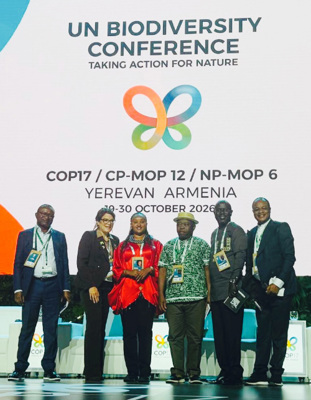
Speaking at a side event hosted by the Rights and Resources Initiative, Dr Gemma Harper explored how lasting conservation success depends on bringing together scientific evidence, local knowledge and community leadership. Drawing on examples from internationally supported conservation programmes, she emphasised that people are not simply beneficiaries of conservation, but essential partners in achieving positive outcomes for nature, livelihoods and resilience.
Reflecting on conversations with community leaders, Gemma highlighted a recurring theme from discussions across COP17: for many communities, conservation is not a target, but a way of life. The event brought together experts working across biodiversity, rights and sustainable development, and showcased approaches that place people at the heart of conservation decision-making. Discussions also provided an opportunity to share JNCC's experience in biodiversity evidence, monitoring and capacity development, demonstrating how science and local knowledge can work together to support effective action for nature.
Global Strategy for Fungal Conservation Launch
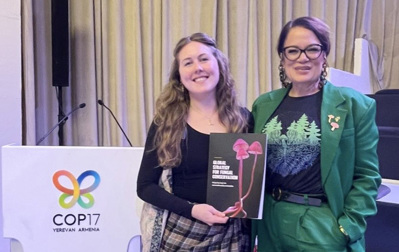
Dr Gemma Harper spoke at the launch of the Global Strategy for Fungal Conservation, highlighting the growing body of scientific evidence demonstrating the fundamental role fungi play in healthy and resilient ecosystems. Attended by government representatives, scientists and conservation organisations, including H.E. Mr Aram Meymaryan, Deputy Minister of Environment of the Republic of Armenia, the event reflected increasing international recognition of the need to better understand, monitor and conserve fungal diversity.
Although fungi underpin many of the natural processes on which ecosystems depend, they have historically received far less attention than plants and animals in conservation policy and practice. Drawing on JNCC's expertise in biodiversity evidence and assessment, Gemma discussed the importance of ensuring that emerging scientific knowledge can inform practical conservation action. The event explored how improved understanding of fungal diversity can strengthen biodiversity monitoring, support nature recovery and contribute to the delivery of global biodiversity goals.
Photographs (in event order):
- Dr Gemma Harper speaking at the Biodiversity Conservation for a Beautiful China event.
- Dr Gemma Harper and fellow panellists at the Rights and Resources Initiative side event.
- Dr Gemma Harper and Leah Farquharson at the launch of the Global Strategy for Fungal Conservation.
15 October 2026: Meet JNCC's COP17 Team
As the world's attention turns to the next UN Convention on Biological Diversity Conference of the Parties (CBD COP17), JNCC is proud to be sending seven experts to represent the UK's commitment to protecting and restoring nature on the global stage.
Biodiversity loss remains one of the most pressing challenges of our time, and this COP offers a vital opportunity for countries to come together, share knowledge and strengthen the collective action needed to meet the goals of the Kunming-Montreal Global Biodiversity Framework (KMGBF). Today’s blog showcases our delegates in their own words: what role they'll be playing at COP17, and what they're hoping the conference will achieve. Their reflections capture a shared sense of hope and excitement about what can be accomplished when the global community unites around a common goal, nature's recovery.

Alyssa Fischer
JNCC’s International Advice Team Co-Leader
Alyssa Fischer, JNCC’s International Advice Team Co-Leader oversees JNCC's work on multilateral environmental agreements, like CBD, the Intergovernmental Science-Policy Platform on Biodiversity and Ecosystem Services, the International Union for Conservation of Nature, and the United Nations Environment Assembly. Her key areas of interest include integration of nature and climate resilience across government and sectors, increasing the representation of subnational governments and community leadership in international processes, and intersectional equity in environmental policy. With that in mind, she will be leading the UK's negotiations Mainstreaming Biodiversity Within and Across Sectors and Engagement of Subnational Governments, Cities, and Local Authorities.
“My biggest hope for COP17 is to see meaningful, ambitious commitments from non-state actors to fund and implement conservation and resilience work that supports our most vulnerable communities.”

Beth Stoker
JNCC’s Director of International Evidence & Advice
Beth Stoker, JNCC’s Director of International Evidence & Advice will be engaging with governments, non-governmental organisations and businesses, sharing UK experience, building relationships, and looking for opportunities to strengthen international collaboration on implementing the KMGBF. She will also be supporting the UK Government delegation, JNCC Chief Executive and JNCC Chair by promoting the use of robust scientific evidence in decision-making.
“My biggest hope for COP17 is that it accelerates implementation. Success will be governments, businesses and other stakeholders leaving COP17 with greater clarity, stronger partnerships and a shared determination to turn global biodiversity goals into practical action on the ground.”
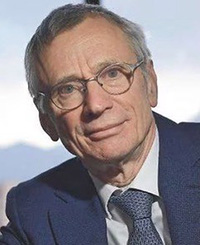
David Cooper
JNCC Chair
David Cooper, JNCC’s Chair, will be representing JNCC, supporting the UK delegation and contributing to a range of side events organised by governments, scientific networks and civil society organisations. Drawing on his extensive experience with the CBD, David will champion effective implementation of the KMGBF and the urgent action needed to halt and reverse biodiversity loss.
In an editorial published in Science ahead of the conference, David outlines what COP17 needs to achieve to put nature on a path to recovery by 2030.
“I believe COP17 can demonstrate that the world remains united in its determination to address the biodiversity crisis. I hope it will mark the moment when ambition translates into action. In particular, we need to see renewed efforts to reform harmful incentives and tackle the underlying drivers of biodiversity loss. Delegates must also complete the work started at COP16 to strengthen the role of Indigenous Peoples and local communities in the Convention’s work, and ensure that the Cali Fund becomes fully operational.”
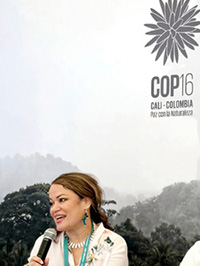
Gemma Harper
JNCC’s Chief Executive
Gemma Harper, JNCC’s Chief Executive will be part of the UK delegation, representing JNCC and talking to partners from across the world about how we move from ambition to action for nature. Much of her focus will be at side events talking about the role that good science, trusted evidence and collaboration can play in helping deliver real progress for biodiversity.
“What excites me most about COP17 is the opportunity to bring together science, relationships and practical action. I care deeply about international collaboration and I've always seen myself as an internationalist. The challenges we're facing are shared ones, and I genuinely believe the best solutions come when countries work together. One of the things I've loved most about leading JNCC is seeing how science can connect people and help build trust across borders. That's really what science diplomacy is all about. My hope for COP17 is that we leave with stronger partnerships, renewed momentum, and confidence that together we can deliver for nature.”

Leah Farquharson
JNCC’s Senior International Biodiversity Adviser
Leah Farquharson, JNCC’s Senior International Biodiversity Adviser will be leading on the UK's Biodiversity and Health agenda item at COP17. This will involve supporting negotiations on how countries can better integrate biodiversity and health considerations in policy and decision-making, following the adoption of the Global Action Plan on Biodiversity and Health at COP16. This agenda item includes consideration and discussion of new indicators and reporting tools to help countries assess and monitor progress in implementing the Action Plan. These tools are intended to provide a consistent approach to tracking how biodiversity and health considerations are being incorporated into national policies and actions, and COP17 will provide an opportunity for Parties to discuss and agree the most appropriate approach for monitoring and reporting progress in a practical and meaningful way.
“My biggest hope for COP17 is that countries can make meaningful progress on implementing the KMGBF and build momentum towards achieving its goals and targets by 2030. The KMGBF targets are ambitious, and achieving them will require a clear understanding of where progress is being made and where challenges remain. I hope COP17 helps drive the action needed over the next few years so that we can deliver tangible outcomes for nature and stay on track to halt and reverse biodiversity loss.”
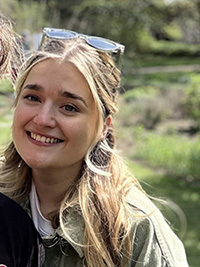
Lucy Ellam
JNCC’s Senior International Biodiversity Adviser
Lucy Ellam, JNCC’s Senior International Biodiversity Adviser will also be part of the UK delegation and will be leading negotiations on biodiversity and agriculture, and invasive alien species. She will also support colleagues across a range of other agenda items, including mainstreaming biodiversity and engagement with subnational governments. Her role will involve negotiating the text of the proposed decisions and engaging with Parties to help advance discussions.
“As this will be my first CBD COP, I am looking forward to seeing international biodiversity negotiations in action, learning from experts across a wide range of topics, and contributing to discussions that will help shape global biodiversity action over the coming years. My biggest hope for COP17 is that Parties continue building momentum behind the implementation of the KMGBF, particularly by making progress on practical actions that help address biodiversity loss, sustainable use and benefit sharing.”

Natalie Askew
JNCC’s Director of International Evidence & Advice
Natalie Askew, JNCC’s Director of International Evidence & Advice will be helping to build the relationships and partnerships needed to turn global biodiversity commitments into practical action. She will also be supporting the UK Government delegation, JNCC Chief Executive and JNCC Chair by promoting the use of robust scientific evidence in decision-making.
“My biggest hope for COP17 is for courageous leadership in confronting the scale of the environmental challenges we face. Success will mean moving beyond commitments to accountable action, with credible financing, and a genuine whole-of-society approach to implementing the KMGBF.”
12 October 2026: How will JNCC's COP17 Team be supporting global negotiations?
The KMGBF is a global plan to halt and reverse biodiversity loss by 2030, and includes 23 ambitious global targets to improve and enhance biodiversity, including to:
- Effectively conserve at least 30% of land and 30% of ocean.
- Reduce pollution from all sources to levels that are not harmful to biodiversity.
- Enhance biodiversity and sustainability in agriculture, aquaculture, fisheries, and forestry.
- Ensure sustainable, safe and legal harvesting and trade of wild species.
COP17 is shaping up as an "implementation COP", with negotiations focused on how to accelerate delivery of the KMGBF rather than negotiating major new targets. The central political challenge remains how to close the acknowledged implementation gap, particularly through finance, capacity-building and support for developing countries.
The UK's submission to this global stocktake was its seventh national report, which shows that the UK is on track to achieve three of the 23 targets by 2030.
JNCC's scientists, including our CEO and Chair, will be attending the meeting in Armenia as part of the UK delegation along with colleagues from Defra and other government departments. For over 30 years, JNCC has played a key role in the UK's work under the Convention on Biological Diversity, including coordinating a joint response to the KMGBF from all four countries of the UK.
As well as supporting Defra, JNCC will be leading on certain topics in Armenia. On behalf of the UK, JNCC’s International Advice Team Co-Leader Alyssa Fischer is leading on Mainstreaming of biodiversity within and across sectors and Engagement with subnational governments, cities and other local authorities to enhance the implementation of the KMGB. Senior International Biodiversity Adviser, Lucy Ellam will be leading on Biodiversity and agriculture and Invasive alien species. Senior International Biodiversity Adviser, Leah Farquharson will be leading on Biodiversity & health.
Published: