
An overview of publications and ongoing work can be found below, with details of active projects at the top of the page.
To get in touch with collaboration requests please email UKMBG@jncc.gov.uk.
UK MBG March 2025 Workshop
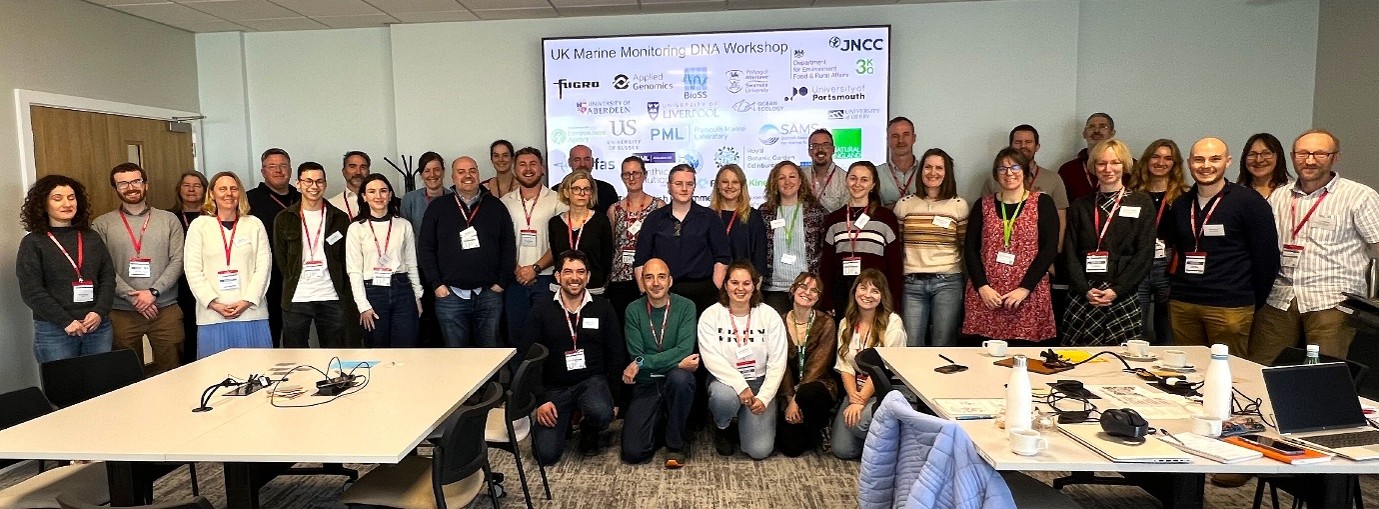
The UK Biomolecular Group held an in-person workshop in March 2025. 38 attendees from a range of organisations across government, SNCBs, academia, consultancies, and laboratories attended. The workshop was funded by the Defra DNA Centre of Excellence.


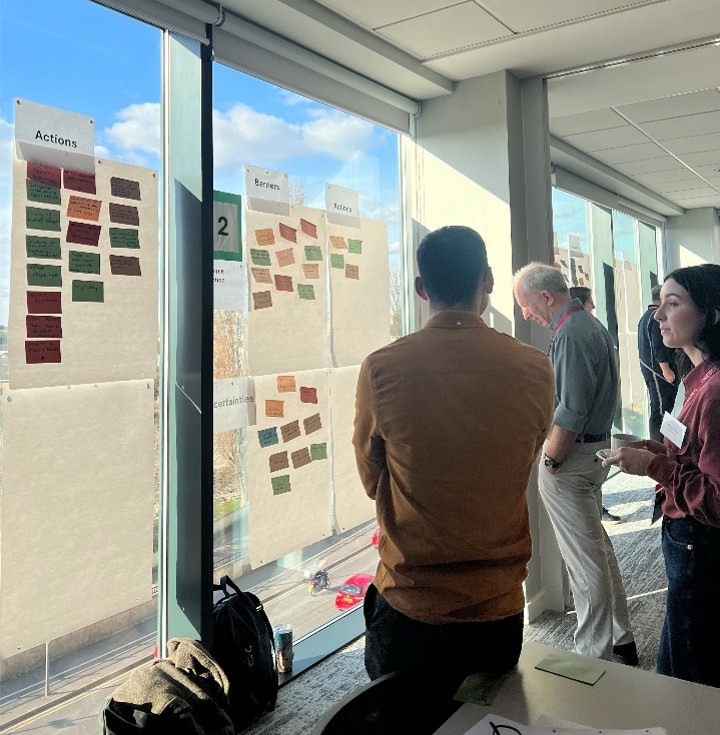
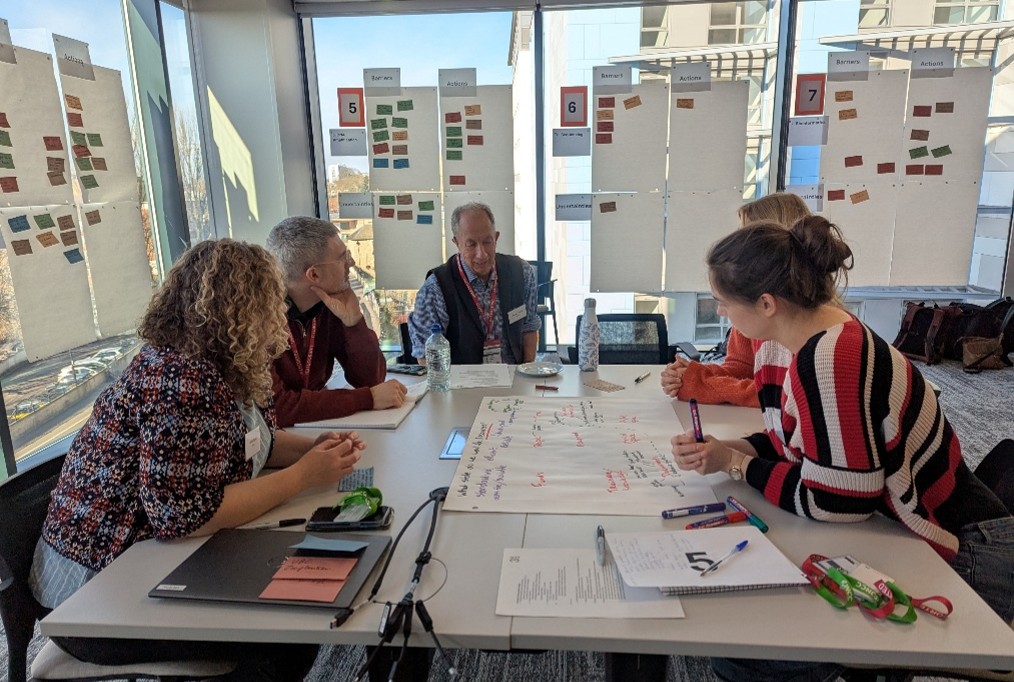
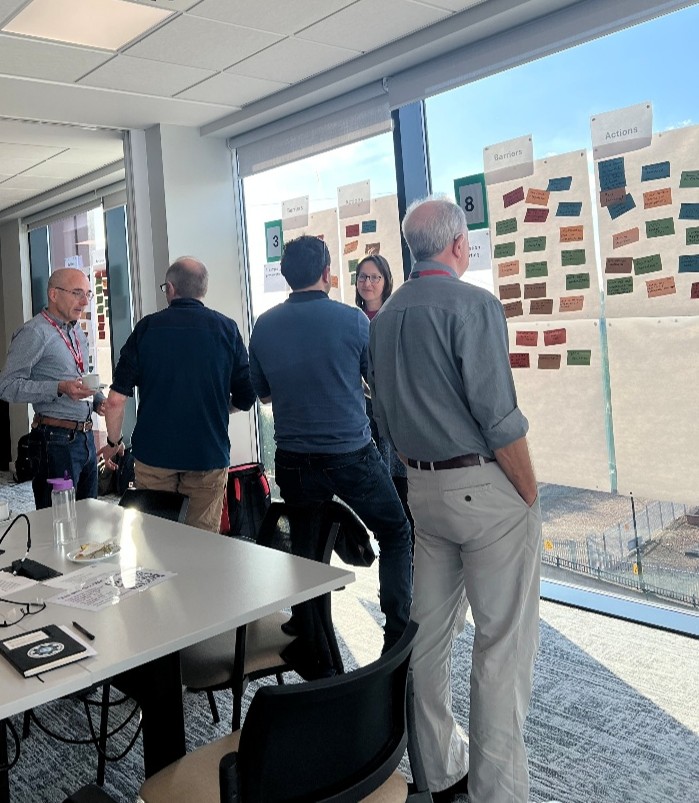
The key aims of this workshop were to:
- Set the direction and focus to better understand and harness the potential of biomolecular approaches within marine monitoring
- Present challenges/questions
- Identify key barriers to uptake in statutory monitoring
- Develop actions to overcome these barriers
- Agree priorities and next steps
- Create a more cohesive network through providing an opportunity for networking and sharing knowledge
- Presentations
- Break out groups
- Networking
The workshop report is available through JNCC's Resource Hub.
UK MBG Case Studies
At the March 2026 workshop the need to advocate for and promote biomolecular approaches for marine monitoring, conservation and management was highlighted. An agreed priority ambition to raise the profile of these methods was to ‘create case studies to communicate marine eDNA applications to wide audiences’.
Work taking place during the 2026/27 financial year includes the development of a template for case studies and working with members of the the UK MBG to publish examples that can raise the profile of what biomolecular approaches can and cannot do for marine monitoring.
If you would like to get involved or can suggest a case study please contact the UKMBG.
UK MBG Best Practice Guidance
Two of the priority ambitions identified at the March 2026 workshop were:
- To create common guidance for standardisation that is flexible but also enables innovation, allowing datasets to be harmonised across applications (AP3).
- To create a decision tree to guide eDNA sampling and monitoring (AP5).
In response to these ambitions, in 2026 the UKMBG produced a best practice guidance document ‘Operationalising biomolecular methods for marine monitoring: a decision-making guide’. This work was led by JNCC and funded for Defra Marine and Fisheries.
The document reviewed available information on known best practices and Standard Operating Procedures (SOPs) and highlights the advantages and disadvantages of different methods.
The document aims to:
- Provide a practical decision‑support tool with decision trees and minimum/gold standards.
- Support transparent, context‑dependent method selection while recognising operational, logistical, and environmental constraints.
- Present a structured framework to guide fit-for-purpose decision-making across diverse marine environments and monitoring applications.
- Promote consistency and comparability, while keeping methods flexible.
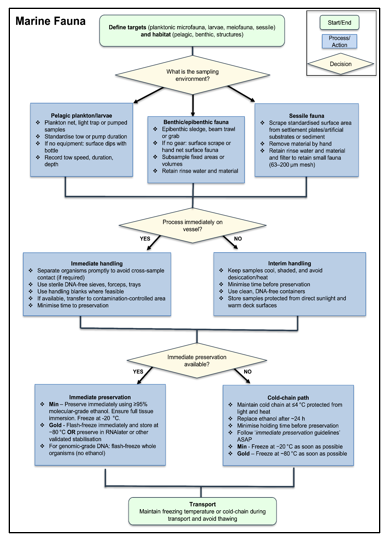
The UK MBG Best Practice Guidance document is currently 'In Press', if you would like access to the unpublished document then please contact the UKMBG.
Future work is planned to revisit and update this document, so if you have any feedback, please do get in touch.
Categories:
Published: