
Published July 2026
The 'Monitoring and adaptation for nature recovery' Signpost Report discusses a four-step approach to address the gradual impact of policies and actions to recover nature. It recommends using scenarios to inform policy adaptation, refocusing local monitoring to enhance understanding of biodiversity outcomes and increasing investment in analysis to improve confidence in future projections. You can also access a copy of 'Monitoring and adaptation for nature recovery' in PDF format.
Background/Introduction
The impact of policies and actions to recover nature will be gradual and it’s likely that national indicators will respond too slowly to inform how policy should be adapted. This paper proposes a four-step approach to address this:
- use existing research to generate models to project the likely biodiversity response;
- adjust local monitoring to gradually improve reliability of the calibration of the biodiversity response to activities;
- analyse local and national monitoring data with information on activities to enable better projections;
- integrate knowledge to support policy adaptation.
It recommends making use of scenarios to inform policy adaptation, refocusing local monitoring to enhance understanding of biodiversity outcomes and increasing investment in analysis to improve confidence in future projections.
The Challenge
Achieving national biodiversity recovery targets and the overall 2050 ambition of the Convention on Biological Diversity requires substantial increases in land managed to provide more biodiversity and significant reductions in pollution. Policy approaches rely on multiple levers, with cumulative impacts building over decades.
There are three inter-related time lags associated with such policy interventions:
- Implementation lag: time for policies to drive sufficient activity at scale.
- Ecological lag: time for ecosystems and species to respond.
- Detection lag: time to detect change through monitoring.
These lags exceed typical project and evaluation cycles, and national indicators of biodiversity are unlikely to show meaningful change until close to target dates.
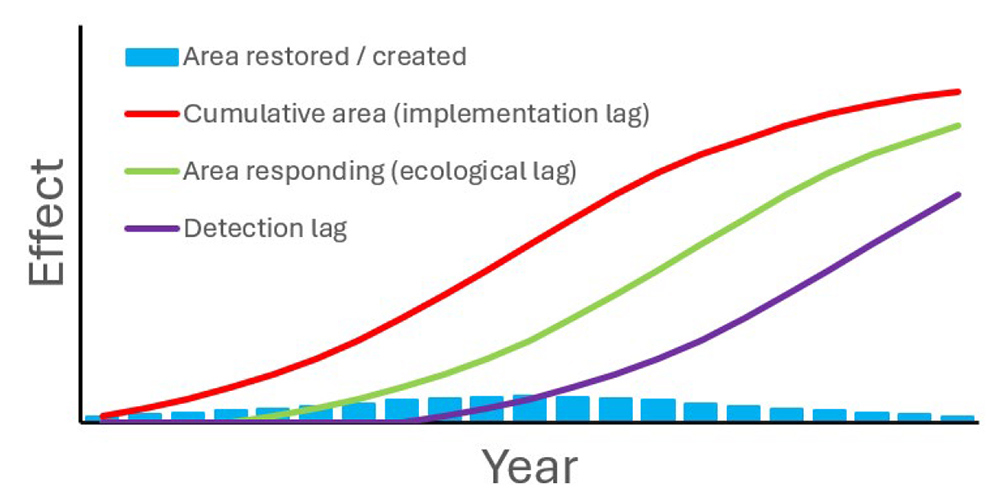
Figure 1. Schematic showing the various response lags following habitat restoration activity.
Whilst projection of habitat condition metrics and ecosystem health indicators provide a signal of potential future outcomes, their reliability is based on the quality of action-outcome assumptions. Similarly, initial changes in species abundance may not be the longer-term response. Uncertainty in outcomes will be further compounded by the effects of climate change as well as novelty and innovation in actions being taken.
All this creates considerable uncertainty around meeting longer-term biodiversity targets and drives the need for policy to adapt as knowledge of the impact of actions and broader drivers (such as climate change) improves. Biodiversity will not be the only outcome impacted by policies and what is good for biodiversity may not align with other policy priorities.
A Strengthened Approach: Project, Calibrate, Analyse, Adapt
The typical policy evaluation cycle, such as set out in the Green Book, is difficult to apply to nature recovery due to the above uncertainties. We propose four steps to address this:
- Integrating research evidence into models enables the ability to project the biodiversity response of actions against the multiple policies that drive them.
- Adjusting monitoring to calibrate the biodiversity response to actions better.
- Analyse monitoring data alongside better data on activities to pick out early signs of recovery to improve projections;
- Integrate projections within different scenarios to allow the policy mix to adapt to achieve nature recovery.
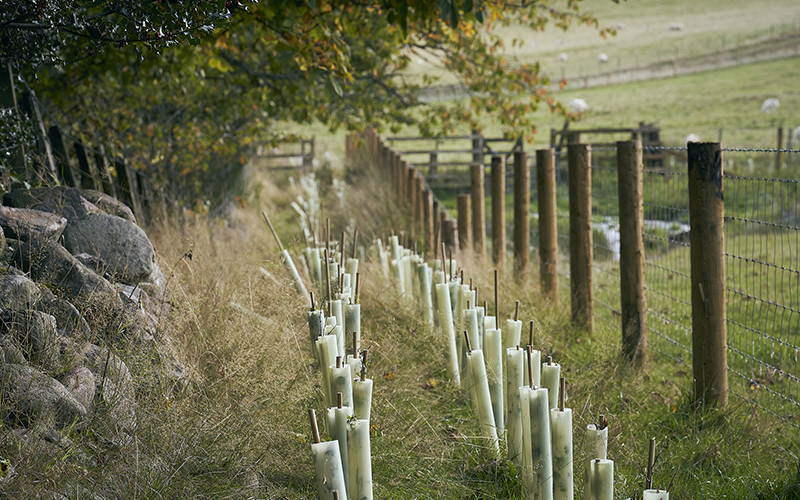
Figure 2. It will take years before the overall benefits of interventions are realised and there is a need to project what we expect these to be, calibrate early signs of improvement against what we expected and analyse this with other data sources to assess the overall impact. Insight from this will help inform any adaptation of policy.
Project
Policies are adjusted through periodic review points, typically around six-year political cycles with more frequent spending rounds. Within even a 20-year pathway it’s not realistic to expect national measurement of biodiversity response to inform the first cycle, and the implementation, ecological and measurement lags may limit what can be used at the end of a second cycle.
To get around this, projections of biodiversity response and other outcomes can be used to inform strategy reviews on these shorter timescales. These projections estimate the combined likely effect of the actions driven by the overall policy mix on biodiversity, incorporating the effects of other land use or industry-driven pressure change. Generating these projections relies on the ability to link policy to the action types it drives and then using existing calibration monitoring and research to build models of the likely biodiversity response.
The various lags in response and detection mean that these projections are the key mechanism to influence policy development and manage the risk around failure to deliver nature recovery in the next two decades. Monitoring still needs to be carried out but as it is very unlikely to pick up responses within the policy cycle to influence it, the value is more in influencing future policy cycles. Given its importance, the overall scale of investment in improving projection of biodiversity change (and other outcomes) should be increased.
Calibrate
Design of actions to implement policy is based on existing experience and the best available research, but the strength of the evidence is variable. Uncertainty arises because of:
- Variation in response at different geographical scales or within different contexts.
- Measurement being over relatively short time periods before full response can occur.
- Impacts of longer-term pressures such as climate change adjusting the outcomes.
- Potentially shorter-term innovation in implementation of approaches.
As a result, it is important to continuously calibrate the biodiversity response to action types through structured local- to landscape-scale monitoring and research, including the use of Before-After-Control-Impact (BACI) designs. This will be key to increasing the confidence over policy cycles and maintain, or adjust, design to ensure each action type will achieve its desired outcomes. Monitoring budgets are limited and designing this more focussed sampling to gain the maximum insight will be key.
This focussed monitoring needs to encompass a sufficient range of action types, replicated for context and geographical scale. There is considerable innovation in the monitoring area and a need to practically assess the potential of cheaper emerging techniques such as eDNA and Earth Observation to complement more traditional metrics. Ensuring that this focussed monitoring can be cross-calibrated with national data sets allows comparisons of novel and existing protocols.
Analyse
This phase explores the effectiveness of the interventions across a range of scales. It links evidence on where action has been undertaken with species monitoring (including the national datasets) to identify early signals of change. Activity data creates analysis opportunities, allowing us to look beyond the standard indictors and to pick out the early signs of recovery, for example, analysing faster responding species.
Data on the actions undertaken is key to the analysis and includes the specific location and extent, type, quality, and their time/duration, ideally by both government and non-government actors. The current availability of this information is variable and addressing this will be one of the key enablers for improving insight. For example, there has generally been more focus on collating details of habitat creation than, say, pollution reduction actions.
Adapt
Adaptation to stay on course for achieving biodiversity recovery targets is fundamentally about adjusting the amount and type of actions that contribute to the national effect. Policy adaptation involves using evidence to adjust the mix and focus of policies to achieve desired outcomes, influencing what actions are undertaken where and in what proportions. Social and economic data inform these choices, whereas calibration of biodiversity response to activity data guides the evaluation of biodiversity outcome.
Initially adaptation of policy will rely on early projections, but as analysis improves the adjustments will become more robust. Adjusting the policy mix depends on generating credible options that can be compared and the key stumbling block is developing credible scenarios beyond a few years.
Biodiversity recovery is a critical outcome from change in land use and reducing pollution, but other environmental and societal benefits must be delivered from the same land resource. Scenarios provide a way of evaluating multiple outcomes and targets and comparing how biodiversity can contribute to them or be delivered with them including any potential trade-offs.
Increasing focus and effort on scenario development is the most impactful way to improve projection capabilities for use in biodiversity strategy evaluation and policy adaption.
Recommendations for insightful monitoring
Develop scenarios to inform policy adaptation
National biodiversity indicators provide the long-term metrics for biodiversity recovery. However, to enable policy adaptation, these indicators need to be considered alongside evidence of other outcomes to generate integrated future scenarios. These scenarios need to make best use of existing evidence to overcome lags and inform projections of outcome.
Align local monitoring with the evidence needed to refine scenario projections
There are two drivers for local monitoring: validating that actions have been undertaken (e.g. compliance monitoring) and assessing the longer-term outcome of those actions. Protocols to validate action need to be rapid and cheap to deploy, to provide simple feedback into local management. The key evolution will be structuring monitoring to improve understanding of the outcomes of action responses, particularly around those actions which are likely to be important drivers but are least understood. The design of this monitoring needs to pick up the effects of scale and provide information on novel actions. This includes adopting a more research style approach (e.g. BACI designs), extend the duration of monitoring programmes and build in cross calibration of protocols. There should be additional investment in standardising protocols across government, industry and NGOs to enhance information on responses.
Resource and develop the analytical capabilities that derive insight from local monitoring
Analysis is required to derive insight from the monitoring data. A key enabler is improving access to detailed activity data and greater integration of this within analysis programmes will improve understanding of biodiversity responses. Results from this will also help inform broader scale analytical programmes using national monitoring data, through providing insight on the likely effects of actions and other factors.
Published: .