
Published February 2026
This introduction to the Signpost Series provides an overview, outlining the rationale and aims of the series. You can also access a copy of 'Nature, Evidence and Action: A Signpost Series' in PDF format.
Purpose
JNCC’s Signpost Report Series provides thought leadership on ways to integrate nature recovery with the wider benefits that society values, unlocking new investment and accelerating nature’s recovery. These reports offer practical ideas and advice on how policies can be developed and implemented, with a strong focus on strengthening the evidence base needed to underpin this transformation.
The Opportunity
For decades, nature conservation in the UK and beyond has relied on protected areas and targeted species interventions. While these measures have prevented the worst losses, they have not halted the overall decline of nature. Limited protected areas and widespread environmental pressures, particularly from production, continue to degrade habitats. Climate change adds further complexity, forcing shifts in species ranges and amplifying risks. It is clear: we must evolve our approach to enable nature’s recovery at scale.
At the same time, recognition of nature’s value has grown dramatically, not just for its intrinsic worth, but for the societal benefits it delivers including climate resilience, health, and wellbeing. This shift is driving a new approach, often called mainstreaming, which emphasizes ecosystem services and seeks to manage and enhance them. Crucially, this moves responsibility and investment beyond government alone, creating demand for co-investment from multiple sectors.
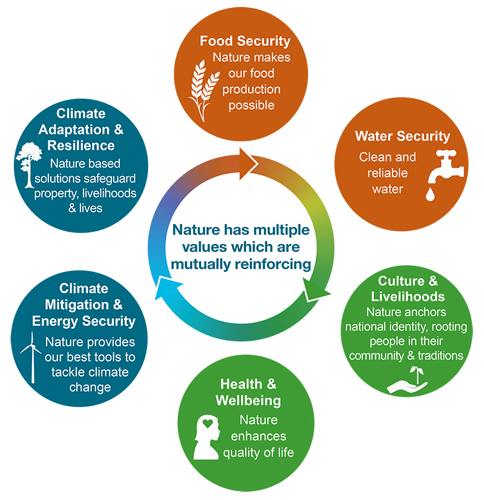
Figure 1. Mainstreaming nature ensures societal values are recognised and encourages investment (image created by JNCC).
The task now is to evolve existing legislative and policy frameworks, retaining their strengths while addressing underlying pressures on nature, highlighting benefits, and attracting broader investment. Evidence is a critical barrier. Many societal benefits, such as flood risk reduction, are difficult to quantify. Nature’s buffering capacity means responses to interventions are often slow, adding complexity. Yet, to secure investment, we need robust business cases and credible projections of change in these benefits.
This transition is not simple. It requires coordinated action across government, industry, academia, and civil society. Government leadership remains essential to set direction and ensure equitable investment. The ideas are not new, but progress has been slow. Now is the time to accelerate.
The Role of Signposts
JNCC’s new Signpost Series is a bold initiative designed to spotlight key opportunities for collaboration and knowledge exchange emerging across the four countries. The primary purpose of this series is to generate discussion to accelerate the mainstreaming agenda and inspire action. These signposts are not rigid solutions, they are catalysts for debate, innovation, and partnership. Each report is intended to evolve as discussions progress, creating a dynamic platform for shared learning and collective progress. The aim is simple yet powerful: start conversations, connect networks, and drive change.
Traditional JNCC reports have focused on comprehensive reviews and consensus-building, which, while valuable, can slow momentum. Signposts take a different approach: lightweight, agile, and provocative. They outline potential directions and practical steps for advancing transformation, with a strong emphasis on evidence to underpin decisions.

Figure 2. Signpost image with viewpoints (© Natural England/Peter Wakely).
This is not just an environmental science challenge; it is a societal and economic imperative. By exploring how policies influence societal outcomes, these signposts equip decision-makers with insights that matter, helping them make informed choices that deliver real impact.
The goal is to empower stakeholders at every level to engage confidently with decision-makers. While we target senior leaders, the content remains relevant for operational teams, helping shift thinking and spark innovation. Collaboration beyond government’s environmental departments is essential. Industry, academia, and the third sector all have a role to play in shaping future policies.
The challenges we face are broad, and so must be our response. These signposts are deliberately concise, accessible to busy professionals yet rich enough to fuel meaningful debate. They invite anyone committed to integrating the natural environment into societal outcomes to join the conversation. This is a call for rapid attention, bold ideas, and stronger evidence to drive change.
The Context of Devolution
The natural environment is a devolved responsibility across the UK. Before the UK left the EU, there was a requirement for close alignment in policies and evidence across the four nations. Since then, divergence has increased, driven by a shared ambition to amplify the benefits the natural environment provides and to boost engagement and investment. This divergence is less of a challenge and more of an opportunity to test a variety of approaches at scale.
While each country will drive its own agenda, there are critical areas where cross-border collaboration adds significant value:
- National Resilience and Security: The UK supports a large population relative to its land and sea area, creating a strong dependency on imports. Decisions on land and sea use, and the societal benefits they deliver, are central to national priorities, including the National Risk Register and Chronic Risk Assessment. Collaboration is essential to manage these trade-offs, consider the global displacement of demands, and assess the environmental impacts of UK international activity, trade deals, and aid investments.
- Learning from Diverse Approaches: Policy divergence creates opportunities for innovation and experimentation. Sharing insights across the four nations can accelerate progress. To enable this, we need alignment in how benefits are assessed and measured. Standardising evidence improves sensitivity, efficiency, and strengthens the UK’s international reporting.
- Accelerating Nature Markets: Industry investment in nature recovery will gain traction through consistent approaches across the UK. Several underpinning policy areas, such as financial regulation, Treasury investment to de-risk private finance, and disclosure standards are reserved matters. Coordinated action here is critical.
- Influencing Research Investment: While devolved governments fund their own research, the majority of investment, around £2 billion annually, flows through UK Research and Innovation. A unified view of priorities across the four nations strengthens influence and ensures research delivers maximum impact.
The ask
The time to act is now. Read these Signposts. Share them widely. Challenge their ideas. Bring your expertise, networks, and creativity to the table. Together, we can transform concepts into action and ensure the natural environment is embedded at the heart of societal progress. Don’t wait, start the conversation today.
Published: .